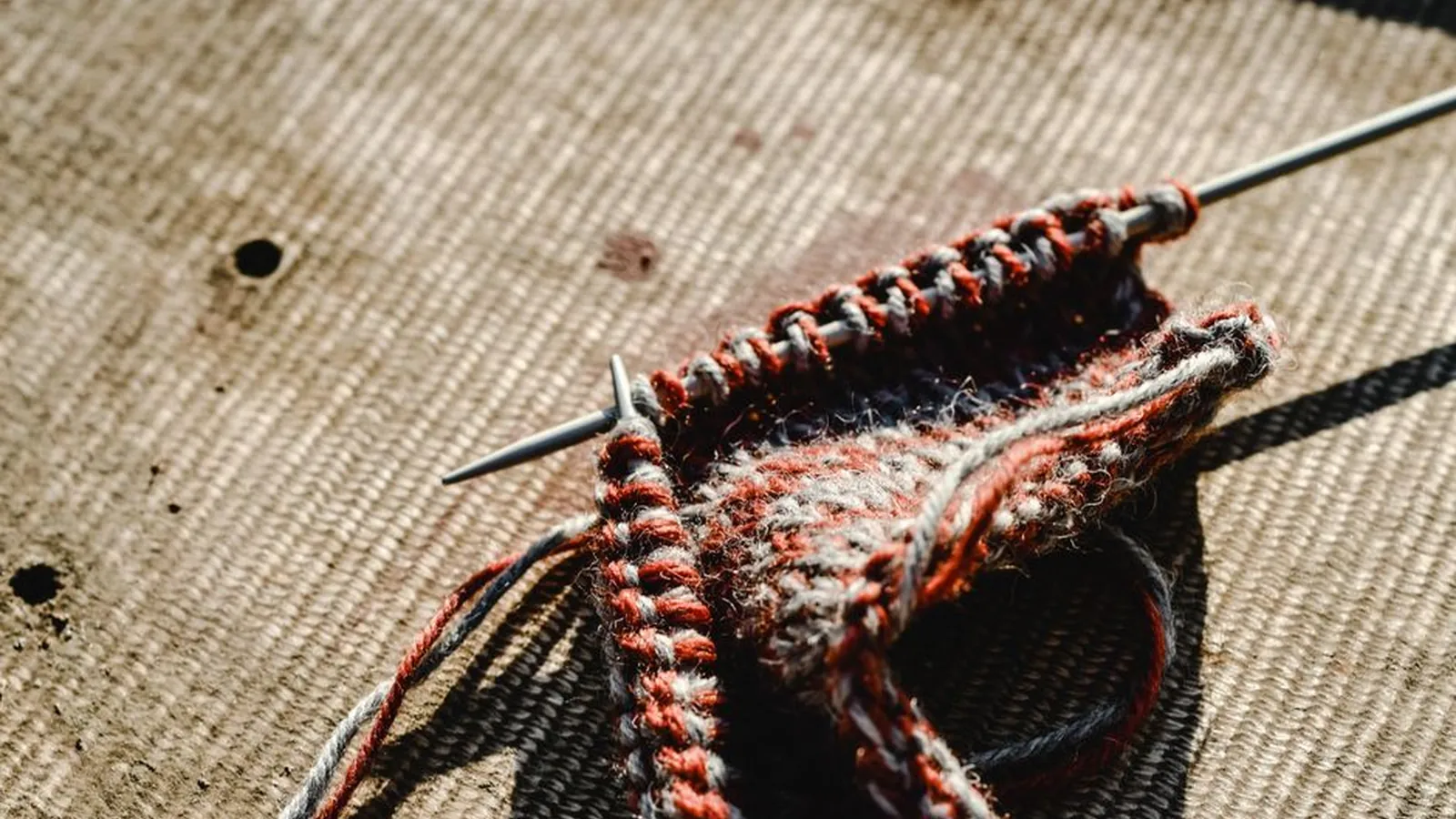
To pick up a dropped stitch, secure the loop so it cannot run, then use a crochet hook to pull each horizontal strand above it through the loop, lowest strand first. When the stitch is level with your current row, slip it back onto the left needle without a twist. Once you've seen the pattern it takes a minute, and it works the same whether you notice the drop one row later or ten. For more fixes like this, see our knitting guides.
What do you need first?
Secure the loop, then grab a crochet hook. LoveCrafts suggests sliding a needle, pencil, safety pin or stitch marker through the dropped loop so it stops running down the fabric. Then take a breath. A dropped stitch looks worse than it is.
No hook to hand? Your working needles will do. They need no extra tools, but there's less room to move, so it's the fiddliest option. For several dropped stitches, stiff yarn, or a drop that is several rows down, LoveCrafts suggests picking the stitch up on an extra needle of about the same size as your working needle.
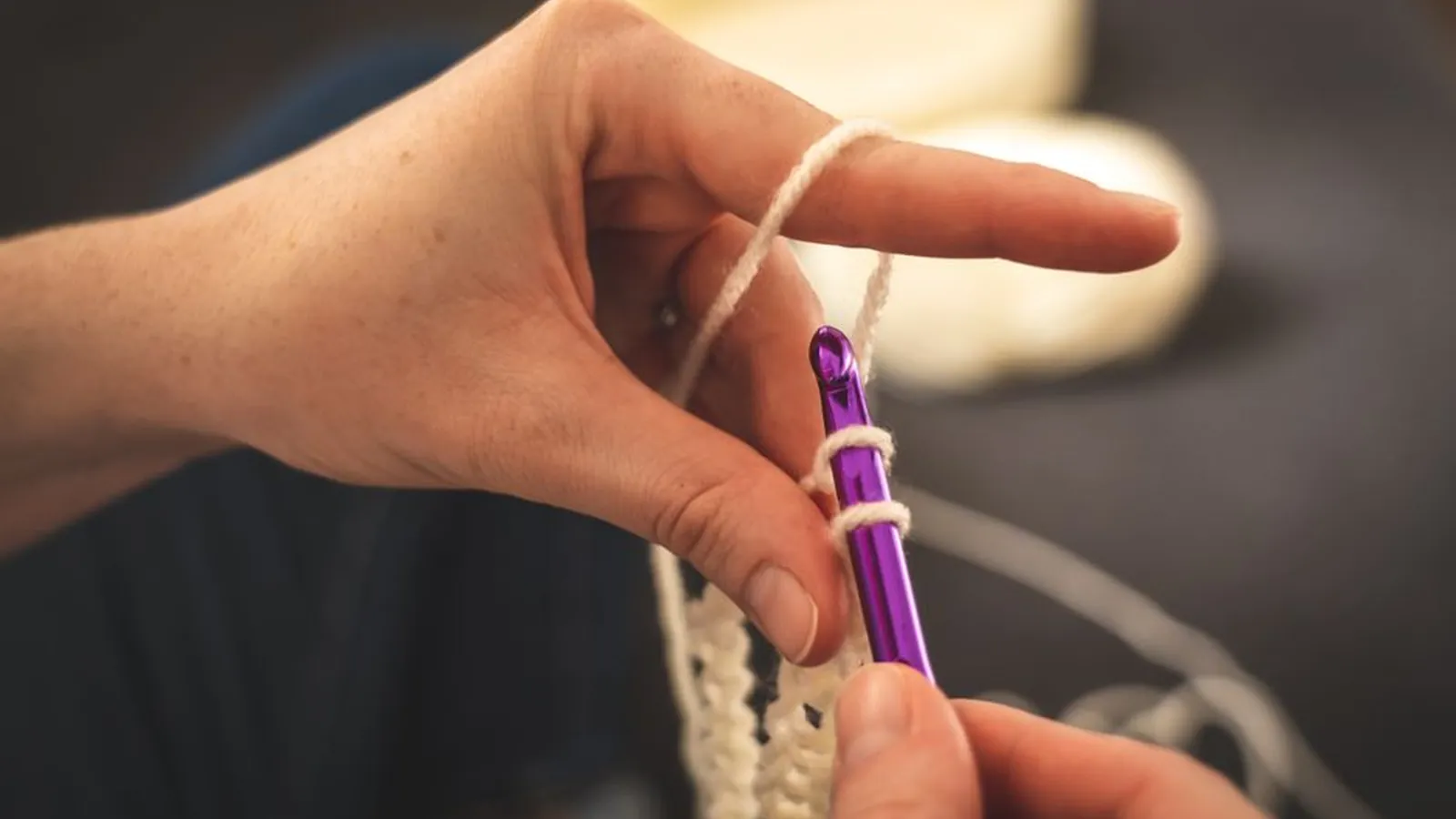
A hook is the easiest tool. Choose one about the same size as your needles, or slightly smaller. If you have more than one dropped stitch, Yarnspirations says to secure the others with a locking stitch marker or a safety pin until you are ready for them.
How do you pick up a stitch that dropped one row down?
Place it back on the left needle with the front leg of the loop to the right of the back leg. Dummies notes that the stitch must not be twisted. Check the legs before you knit it. That's it.
How do you pick up a stitch several rows down?
Work up the ladder with a hook, one strand at a time, in order. A ladder is the set of loose horizontal strands left above the dropped stitch, one for each row it has fallen.
- Knit to just before the dropped stitch, with the knit side facing you.
- Insert the hook into the dropped stitch from front to back.
- Catch the lowest ladder strand and pull it through the stitch toward you. The stitch has moved up one row.
- Insert the hook into the new loop, catch the next strand, and pull it through the same way.
- Repeat until the stitch is level with your current row (or round, if you are working in the round).
- Slip the loop onto the left needle, then keep knitting.
Order matters. Cocoknits points out that stretched ladders near the top are easy to pick up out of order, and LoveCrafts says that picking them up out of order leaves the work bunched and messy. If you lose your place, drop the stitch back down and start again. When you are unsure, look at the back of the work.
For the last step, Cocoknits twists the loop slightly to the left, puts the left needle through the front of the loop, and then takes out the hook.
How do you fix a dropped purl stitch?
Turn the work so the other side faces you, then use the same hook method. Dummies describes it for a sock in the round: turn the work so the inside faces you, pull each strand through one at a time, and return the stitch to the needle untwisted. If you would rather stay on the same side, pulling the strand through from the opposite direction makes the opposite type of stitch, so a knit pull-through and a purl pull-through are mirror images.
In garter stitch, the rows alternate. LoveCrafts says to alternate knit and purl pick-ups on each row, or turn the work for each row. If you want a refresher on why the two stitches look different, read the difference between knit and purl stitches.
When is it too late to pick it up?
If you are many rows past the drop, you have two choices. Yarnspirations says a dropped stitch is easy to fix when you catch it within a few rows, and that if several inches have been worked there is usually not enough yarn to repair it, so you unravel back to the drop and reknit those rows.
The other choice is to sew the stitch in. LoveCrafts suggests picking the stitch up with one of the methods above until you reach the top of the ladder, then sewing it down with matching yarn. Pass the yarn through the loop at least once, or it may drop again.
What if the fixed stitch looks loose?
It may look uneven at first. Tug the area gently along and across the fabric. If it still looks off, washing or wet blocking usually evens it out.
How do you stop stitches dropping?
One habit helps most: catch it early. The sooner you spot a drop, the fewer strands you have to work up. Count your stitches at the end of a row, and be careful on rows with decreases such as knit two together (k2tog), where a loop can slip off the needle tip.
Try it
When you spot a drop, secure the loop first, then note which row you were on before you start fixing. Row & Round's row counter saves your row, so you can find your place again after the repair.
Bottom line
Secure the loop, find the ladder, and pull the strands through in order with a hook, lowest first. Put the stitch back on the left needle untwisted, and tug the fabric gently to even it out. If you are many rows past the drop, unravel or sew it in.
Questions
- Do I need a crochet hook to pick up a dropped stitch?
- A hook is the easiest tool, ideally one about the size of your needles or slightly smaller. You can also use your working needles or a spare needle, but there is less room to move.
- Why does the fixed stitch look loose?
- A repaired stitch can look uneven at first. Tug the area gently along and across the fabric. If it still looks off, washing or wet blocking usually evens it out.
- What if I have more than one dropped stitch?
- Secure the others with a locking stitch marker or a safety pin, then fix them one at a time. A spare needle also helps when several stitches have dropped.
- What if I do not notice the drop for many rows?
- If you caught it within a few rows, a hook still works. If several inches are worked, unravel back to the drop and reknit, or sew the stitch in with matching yarn.
- Which way do I pull the strand through on a purl stitch?
- Either turn the work so the other side faces you and use the knit method, or pull the strand through from the opposite direction. The direction decides whether you make a knit or a purl.