In stockinette, you count rows by counting the V's in one column on the right side: each V is one row. In garter stitch, each ridge is two rows. The cast-on row never counts as a row of knitting. Count by reading the fabric and you can pick up a project, look at it, and know where you are, no tally on paper needed. This guide covers both stitches, the row on your needle, and a way to mark a row. For more on keeping your place, see counting rows and rounds. Crocheters count rows too, and the same ideas carry over.
How do you count rows in stockinette?
Look at the right side (RS) and count the V's in one column. On the right side of stockinette, every knit stitch looks like a V, and those V's are what you count (Lion Brand).
You do not need to count the wrong side (WS). Purl rows show up as V's on the right side, so they are already in your count (Stitch and Story). If you are fuzzy on which stitch makes a V, see knit and purl stitches.
Pick one column and follow it up from the cast-on edge so you do not skip across to a neighbouring column. Reverse stockinette, with the purl side facing out, is harder to read. Turn it over and count the V's on the back instead.
How do you count rows in garter stitch?
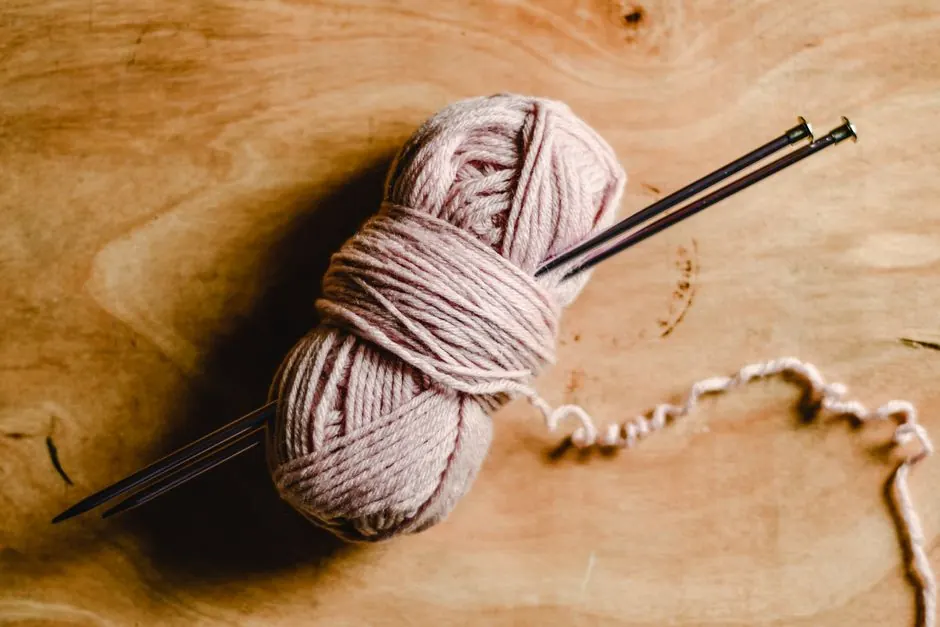
Photo by Eva Bronzini on Pexels
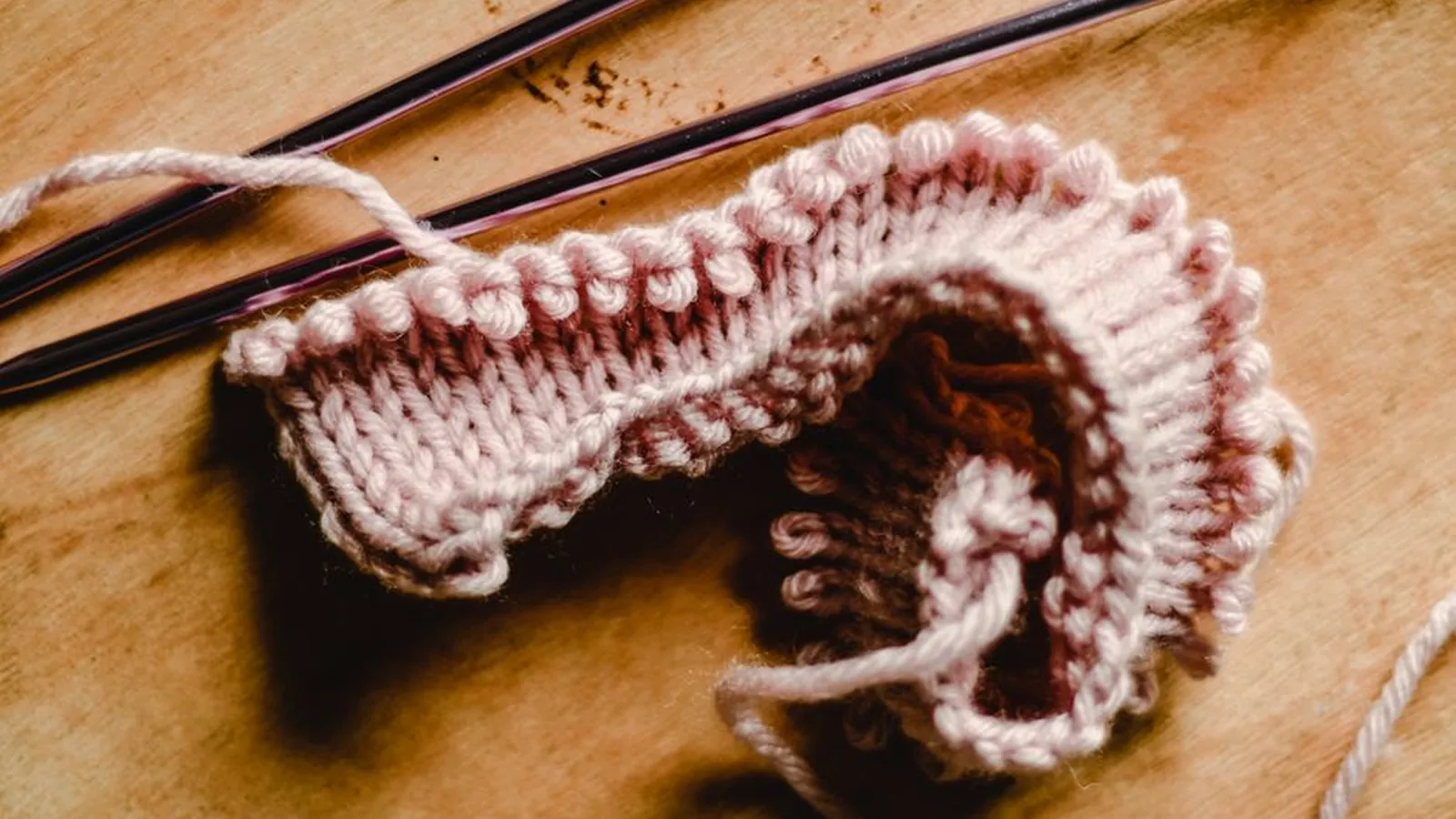
Count the ridges, and each ridge is two rows. Garter stitch is knit on every row, so neither side shows V's. Instead the fabric forms wave-like ridges.
There are two ways to get the number:
- Count the ridges on the front and the ridges on the back, then add the two totals together. In one swatch, four ridges on the front and five on the back made nine rows (Lion Brand).
- Count the ridges on one side and double them. Turn the needle so the tip points right, leave out the cast-on row, and count: 12 ridges means 24 rows (Knit With Freedom).
| Stitch | What to count | What it equals |
|---|---|---|
| Stockinette | V's in one column, right side | 1 V = 1 row |
| Garter | Ridges on one side | 1 ridge = 2 rows |
| Garter (both sides) | Ridges on front plus ridges on back | The total number of rows |
Your yarn tail can tell you whether the total is odd or even. If the tail is on the same side as your working yarn, you have worked an even number of rows. If it is on the opposite side, the count is odd, so count the row on the needle as one more (Knit With Freedom).
Does the cast-on row or the row on the needle count?
The cast-on row does not count. Three sources agree on that: it is not a row of knitting.
The row on your needle is where guides differ. Lion Brand counts the stitches on the needle as a row: in its example, eight V's above the cast-on plus the needle row make nine, so the next row to work is row 10 (Lion Brand). Stitch and Story says the loops still on the needle are not a finished row yet (Stitch and Story).
Both ways work, as long as you use the same one for the whole project. Decide whether your number means "rows finished" or "the row I am on", and keep to it. Whichever you choose, check how your pattern phrases it before you lean on a count. If you also work in crochet, counting crochet rows covers that craft.
How do you mark a row so you can count up from it?
Put a removable stitch marker or a safety pin on a stitch in the row you want to remember, then count the V's above it. This works well for cables, where the twists make it hard to tell how many rows have passed. If a cable repeats every 8 rows and you count four V's above the marker plus the stitch on the needle, that is five rows since the last twist, so you have two more before the next one. The same trick helps with lace and with fuzzy or dark yarns that hide the stitches (Lion Brand).
What does a worked count look like?
Here is a generic swatch, step by step, so you can check your own method against it. Say you cast on, knit in stockinette, and stop with the right side facing you.
- Find one column of V's and put your finger at the bottom, just above the cast-on edge. Do not count the cast-on edge itself.
- Move up the column one V at a time and say the number aloud. Say you reach eight V's.
- Look at the needle. If you count the row on the needle, that makes nine rows and the next row to work is row 10. If you count only finished rows, you have eight and the next row is the ninth.
- Write down which rule you used, in a notebook or in the margin of your pattern, so a later count matches.
For a garter swatch, the steps are the same except that you count ridges: count them on the front, count them on the back, and add the two numbers. Counting once from each side is also a quick way to check your work, because the two totals should agree with what the yarn tail told you.
If your count ever seems off, count the same column a second time, slowly. It is easy to slide into a neighbouring column partway up, so a ruler laid along the column can keep your eyes in line.
Try it
Reading your fabric is a good habit, but it is easy to lose count when someone talks to you mid-row. Row & Round's row counter keeps your row number, so you can set the work down and still know where you are. Row & Round is coming soon to iPhone, iPad and Apple Watch.
Bottom line
Count V's in stockinette and double the ridges in garter, and leave the cast-on row out. Pick one rule for the row on your needle and stay with it all project.
Questions
- Do I count the cast-on row?
- No. The cast-on row is not a row of knitting, so start counting with the first row you work after it.
- How many rows is one garter ridge?
- Two rows. Count the ridges on one side and double the number, or count the ridges on the front and the back and add them together.
- How do I count reverse stockinette?
- Turn the work over and count the V's on the back, where they are easy to see.
- How can I tell if I have worked an odd or an even number of rows?
- In garter, look at your yarn tail. If it sits on the same side as your working yarn, you have worked an even number of rows.