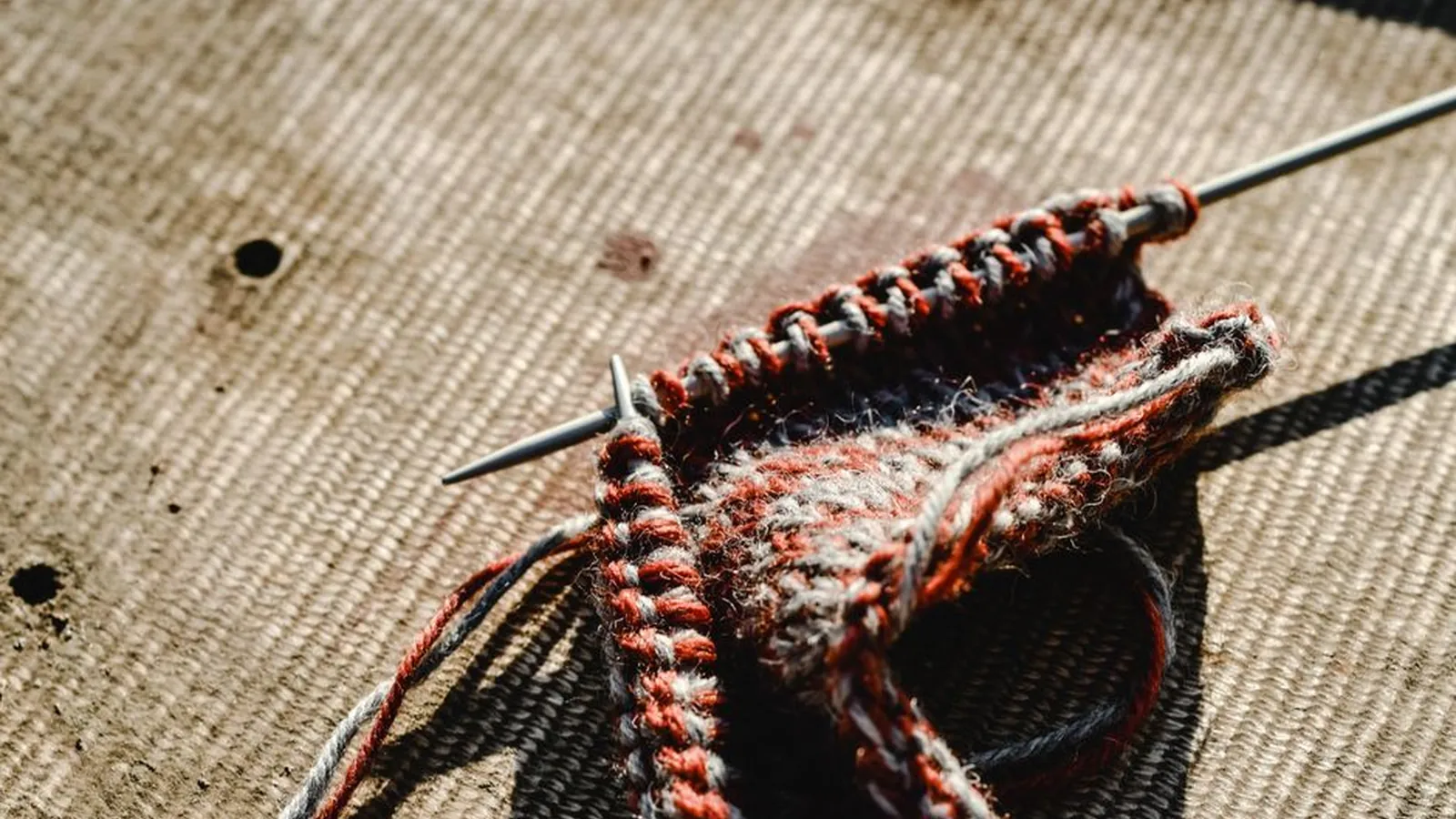
K2tog (knit two together) leans to the right. Ssk (slip, slip, knit) leans to the left. Both turn two stitches into one, so each takes a stitch off your needle, and the slant is the only difference you will see in the fabric.
If you want the full steps for the right-leaning one, our guide on how to knit two together goes through it slowly. Here the two sit side by side.
Which way does each decrease lean?
K2tog slants right and ssk slants left. Studio Knit offers an easy picture to hold on to: ssk looks like a backslash (\) and k2tog looks like a forward slash (/).
| K2tog | Ssk | |
|---|---|---|
| Stands for | Knit two together | Slip, slip, knit |
| Leans | Right (/) | Left (\) |
| Stitches removed | One | One |
| Mirror of | Ssk | K2tog |
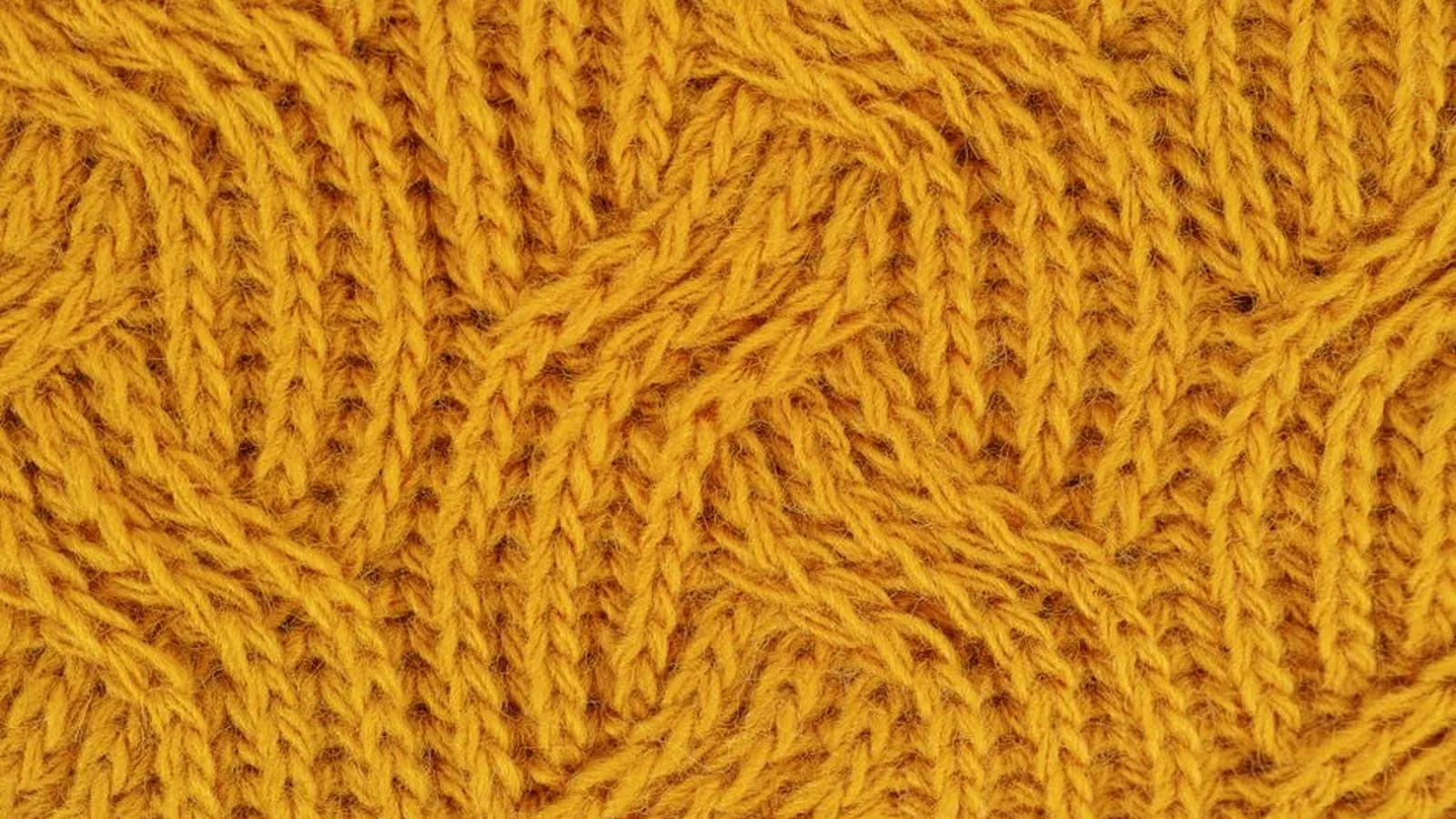
Lean matters because you can see a decrease. A line of them stacked up the edge of a raglan, a sleeve or a hat crown draws a diagonal, and you want the diagonals on the two sides to mirror each other.
How is each one worked?
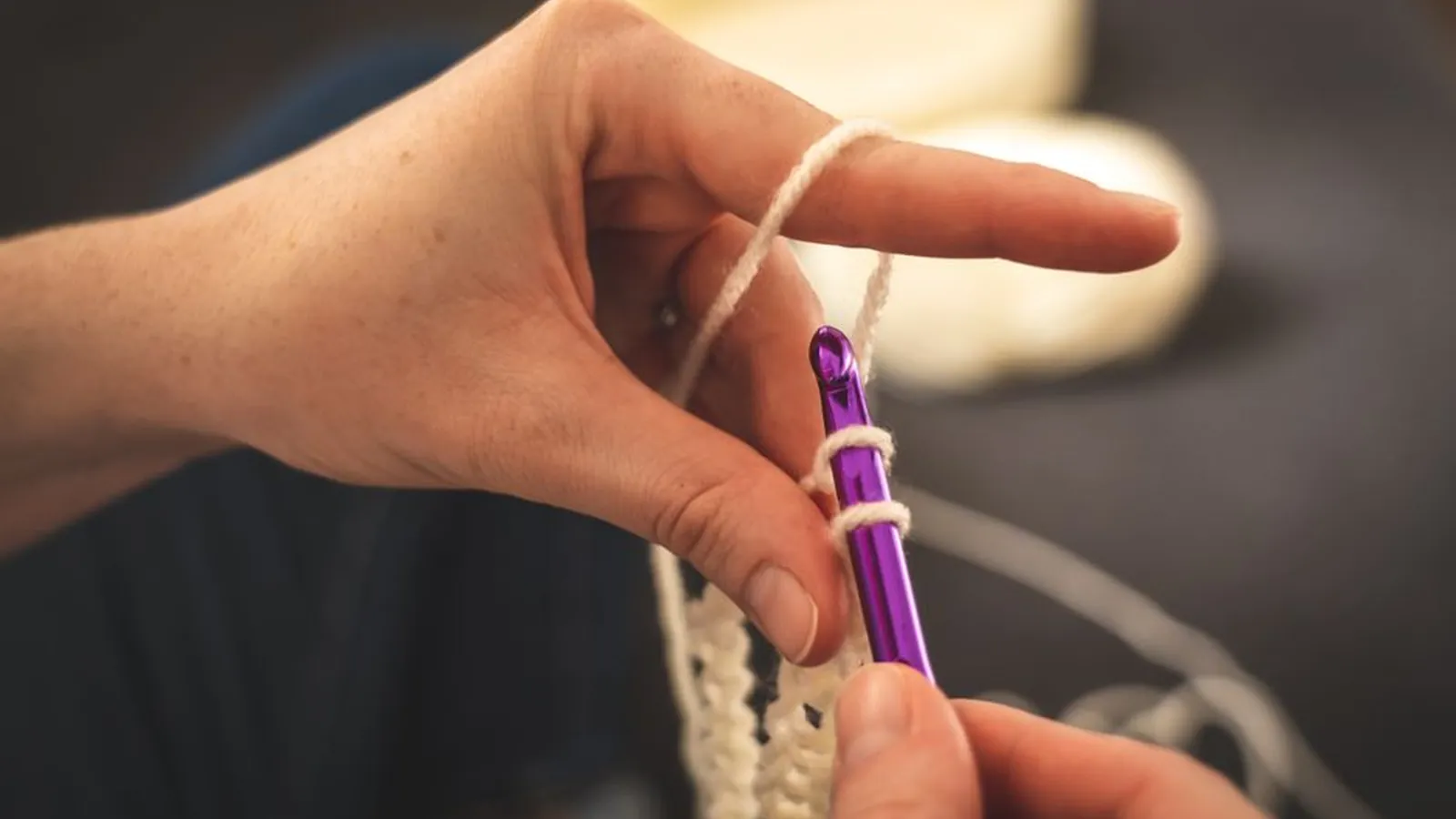
K2tog needs no setup. Put the right needle through the next two stitches on the left needle, front to back, wrap the yarn as for a normal knit stitch, pull the loop through both, and slip the two old stitches off. Tin Can Knits shows the same three moves.
Ssk takes one extra step, because the stitches are slipped first:
- Slip one stitch knitwise.
- Slip the next stitch knitwise.
- Put the left needle through the fronts of both slipped stitches.
- Wrap the yarn around the right needle and pull the loop through both stitches, knitting them together.
Tin Can Knits points out why you slip knitwise: it turns the stitches so the decrease lies a little flatter than a k2tog worked through the back loop. If your pattern's wording on the loop differs from the steps above, follow the pattern.
Why do patterns use them as a pair?
Because one leans right and the other leans left, they make a matched set. Lion Brand calls these paired decreases and notes that raglan seams and lace often use one of each, so the stitches seem to point toward each other.
A simple sleeve round from Tin Can Knits shows the pattern: "k1, ssk, knit to last 3 sts, k2tog, k1". The ssk sits at the start with a left lean, and the k2tog sits at the end with a right lean, so the two sides match. If you are spreading decreases across a row instead of at the edges, our guide to decreasing evenly across a row covers where they go.
Is ssk the same as skp?
They do the same job: both are left-leaning decreases and are treated as interchangeable, but many knitters find ssk lies flatter. Older patterns often write skp, and modern patterns usually ask for ssk, according to Lion Brand. If you meet skp in an older pattern, working ssk is a safe swap.
What if the pattern asks for three stitches at once?
Each decrease has a three-stitch version. K3tog works like k2tog, except the right needle goes through three stitches before you knit them together. Sssk is the left-leaning partner: slip three stitches knitwise, then knit them together, as Tin Can Knits describes. Either one removes two stitches instead of one, so recount afterwards.
How do you keep the two apart while you knit?
The mix-up most knitters hit is working an ssk where the pattern said k2tog, or the other way round, without noticing until a few rows later. Two habits help. Say the pair out loud once as "k2tog right, ssk left" before you start the row. And after the first decrease row, look at the diagonal it makes: if you stack k2tog on every other row, the line slants right, and the ssk line slants left. If one side of a sleeve or crown leans the wrong way, go back to the last row where the two sides matched and check each decrease on the way.
Which one does your pattern want?
Work the one the pattern writes. A designer picks a lean on purpose, so swapping k2tog for ssk changes the slant of that decrease and breaks the mirror. When you read a line, look for the abbreviation first, then note whether it sits near the start or end of the row, as in the sleeve example above. Our guide to reading a knitting pattern covers the rest of the abbreviations beside them.
Can't tell which is which? Put your finger on the stitch you just made. If the slant points up and to the right, it is k2tog. Up and to the left, it is ssk.
Try it
Cast on twelve stitches in any yarn and knit a few rows. On a right-side row, work "k1, ssk, knit to last 3, k2tog, k1" and count your stitches: you should have ten. Repeat on the next right-side row and you will see the two diagonals build toward each other.
When a pattern repeats the decrease row every few rows, Row & Round's row counter helps you keep your place, so you know whether this is a decrease row. The app is coming soon to iPhone, iPad and Apple Watch.
Bottom line
K2tog leans right and ssk leans left. Use them as a pair when shaping should look even, and use the one the pattern names when it asks for a single lean. Count your stitches after each decrease row and you will catch a wrong swap early.
Questions
- Which way does ssk lean?
- Left. Ssk slants like a backslash, the mirror image of k2tog, which slants like a forward slash.
- Can I use k2tog instead of ssk?
- You can, but the stitch will lean the other way, so shaping that should mirror will not. Use k2tog where the pattern wants a right lean and ssk where it wants a left lean.
- Is skp the same as ssk?
- Both are left-leaning decreases and are treated as interchangeable. Many knitters find ssk lies flatter, and modern patterns usually ask for it.
- Do I always use them as a pair?
- Often, for even shaping on raglans, lace and sleeves. A pattern can also call for just one when only one direction is needed. Follow the abbreviation it gives.