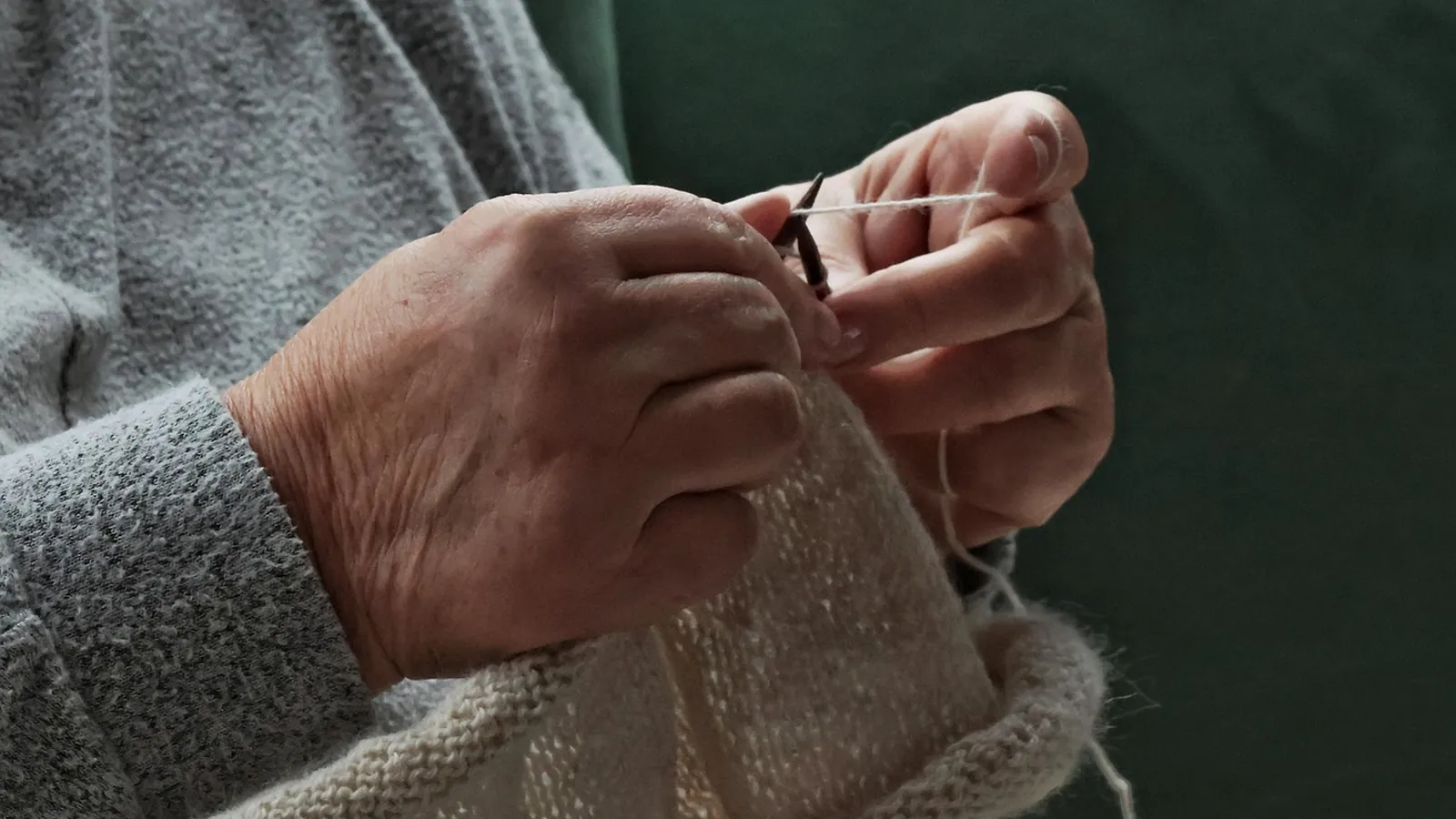
Gauge is how many stitches and rows fit into a set measurement, usually 10 cm (4 in). It matters because it decides the size of your finished piece: two knitters can use the same pattern and the same needles and still get different sizes. The pattern's gauge is the target that evens that out (Tin Can Knits). Gauge sits near the top of most patterns, so it is one of the first things to look at when you are reading a pattern. Crocheters have the same idea, counted in stitches and rows or rounds, and the swatch steps below work the same way with a hook.
What does gauge mean in a pattern?
A gauge line gives the stitches and rows you should get over a square, usually in the stitch the pattern is mostly worked in. Patterns list it near the yarn weight and needle size (Vogue Knitting). Here is a generic example:
| You read | It means |
|---|---|
| 20 sts and 28 rows = 10 cm (4 in) in stockinette | Over a 10 cm square you should count 20 stitches across and 28 rows up |
| Needles: 4 mm | The size the designer used to get that gauge, and a suggestion only |
The needle size is only where the designer started. Your hands may need a different one, and that's normal. For a full tour of a pattern's opening lines, see how to read a knitting pattern.
Why does a small gauge difference matter?
Because the error grows with every stitch you cast on, and a small slip at the needles turns into a visible one at the hem. Lion Brand's example is a sweater back that should measure 20 in across, at 4 stitches per inch, which calls for 80 stitches. At 4.25 stitches per inch, those 80 stitches make a piece about 18.8 in wide. At 3.75, it is about 21.4 in (Lion Brand). That's a quarter of a stitch per inch, and it moved the width by more than 1.5 in.
Tin Can Knits shows the same thing at chest size: a 40 in sweater at 5 stitches per inch needs 200 stitches, but at 4.5 stitches per inch those 200 stitches give 44.5 in (Tin Can Knits).
Gauge also changes how much yarn you use, and how the fabric feels. A piece worked looser than the pattern needs more yarn, and a tighter one needs less.
How do you knit a gauge swatch?
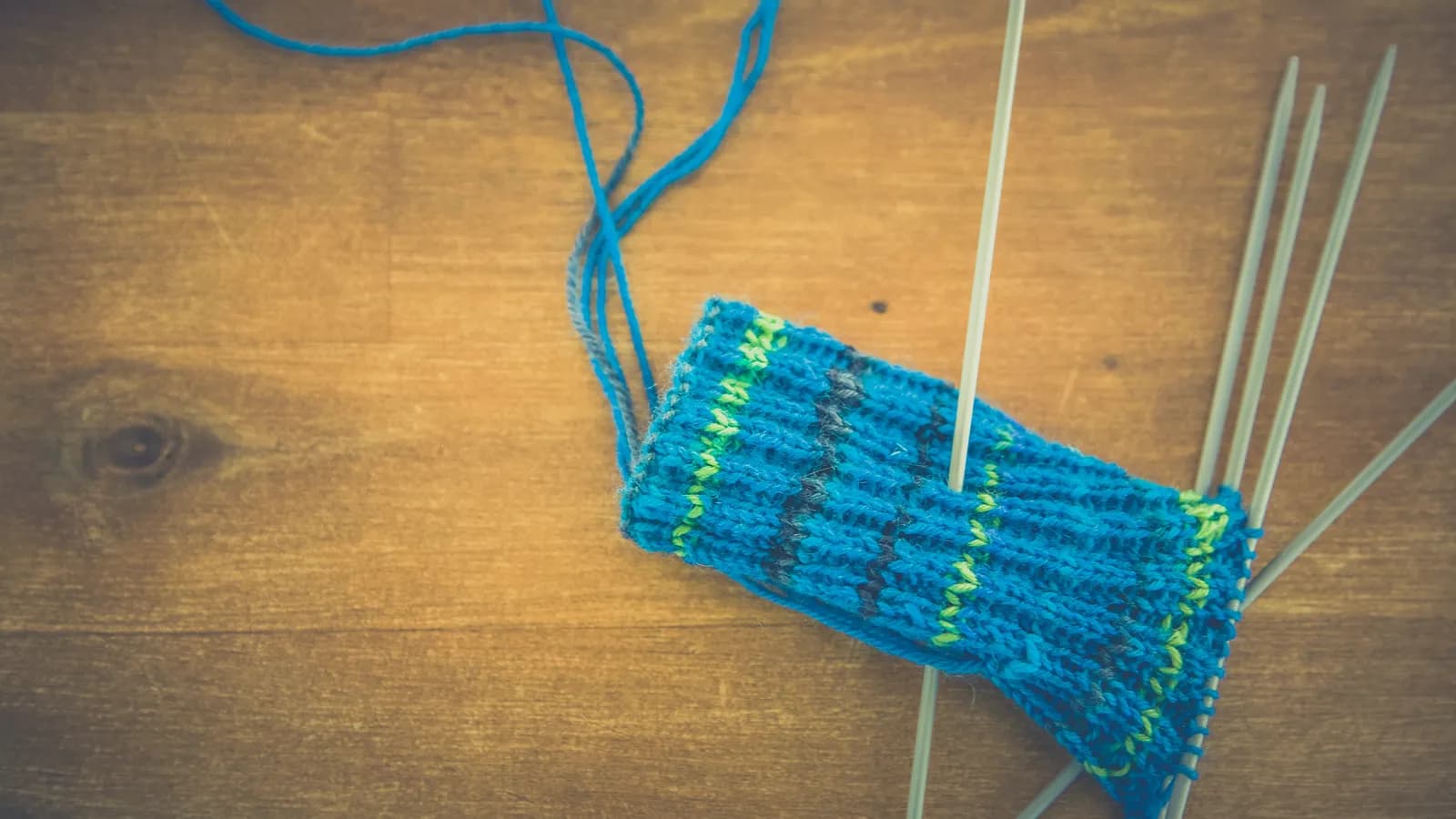
A swatch is a small test square knitted before the real project. Use the exact yarn and needles you plan to use, because even a different needle brand or yarn colour can change your gauge (Vogue Knitting).
- Cast on enough stitches for at least 10 cm (4 in), and a few more so you can measure away from the edges.
- Work the stitch pattern the gauge line names. That is not always stockinette.
- Add a few garter rows at the top and bottom, and a garter stitch at each edge, so the swatch lies flat.
- Keep going until the swatch is a bit taller than 10 cm (4 in).
- If the project is worked in the round, knit the swatch the same way, in the round, so your tension matches.
Work it in the same stitch pattern and the same way you'll work the project. Flat rows and rounds each have their own feel in your hands, and your tension can differ between them.
How do you measure it, and what do you change?
Slide the swatch off the needle, wash it and let it dry the way you will treat the finished piece, then lay it flat. Tin Can Knits points out that many yarns change a lot with blocking, so the blocked gauge is the one that counts (Tin Can Knits).
Measure 10 cm (4 in) across, count the stitches in that span, then do the same up the swatch for rows. Count a partial stitch as a fraction. Compare your numbers with the pattern.
| Your swatch has | Your stitches are | Try |
|---|---|---|
| More stitches than the pattern | Too small | A larger needle |
| Fewer stitches than the pattern | Too big | A smaller needle |
| The same number | Right | Start the project on these needles |
After each change, knit a new swatch. Repeat until you land as close to the pattern as you can. Then check again once you have knit about 12 cm (5 in) of the real piece, because gauge can shift when you work the full number of stitches (Vogue Knitting).
Does stitch gauge or row gauge matter more?
Stitch gauge, in most patterns, because it sets the width. Lion Brand notes you can sometimes match stitch gauge but not row gauge, and unless the pattern is worked from side to side, stitch gauge is the one to match first (Lion Brand). If you cannot hit both, favour stitches, and read the pattern's length instructions to see whether it counts rows or measures inches.
Gauge matters less for cowls, scarves, shawls, blankets and hats, where a small size difference is easy to live with. Whether to swatch for those is up to you.
Try it
Swatching means counting rows as you go. Row & Round's row counter keeps your row count, so you can stop mid-swatch and still know exactly where you are.
Bottom line
Gauge is stitches and rows per 10 cm (4 in), and matching it is what makes a pattern come out the right size. Knit a swatch with your real yarn and needles, block it, count it, and change the needle size until it matches before you cast on.
Questions
- Is gauge the same as tension?
- Yes. In knitting the two words mean the same thing: how many stitches and rows fit into a set measurement.
- Do I need to swatch for a scarf?
- Usually not. Scarves, cowls, shawls, blankets and hats forgive small size differences, so swatching is your call.
- Should I measure the swatch before or after washing it?
- Measure it both times, but trust the blocked measurement. Many yarns change when blocked, and you will block the finished piece too.
- Which matters more, stitch gauge or row gauge?
- Stitch gauge, in most patterns. The exception is a piece worked side to side, where the rows run across the width.