Little Field Baby Blanket: Free Baby Blanket Knitting Pattern
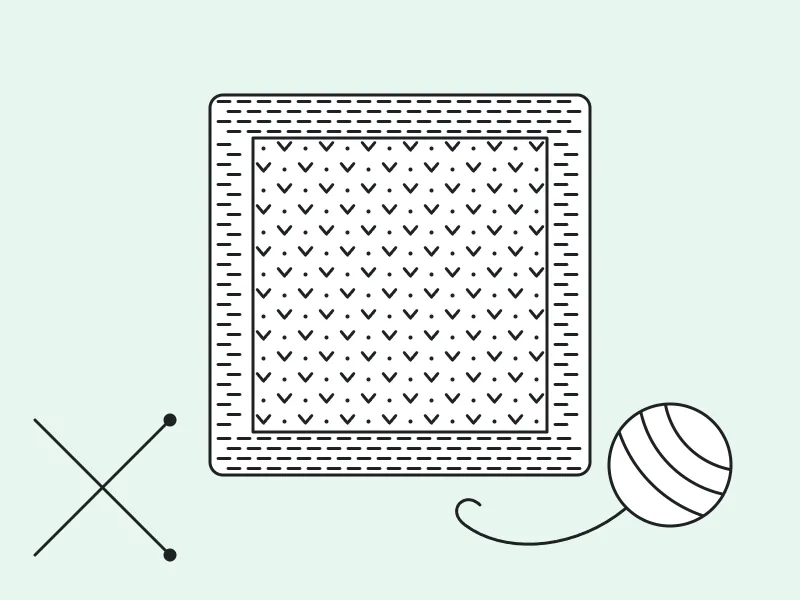
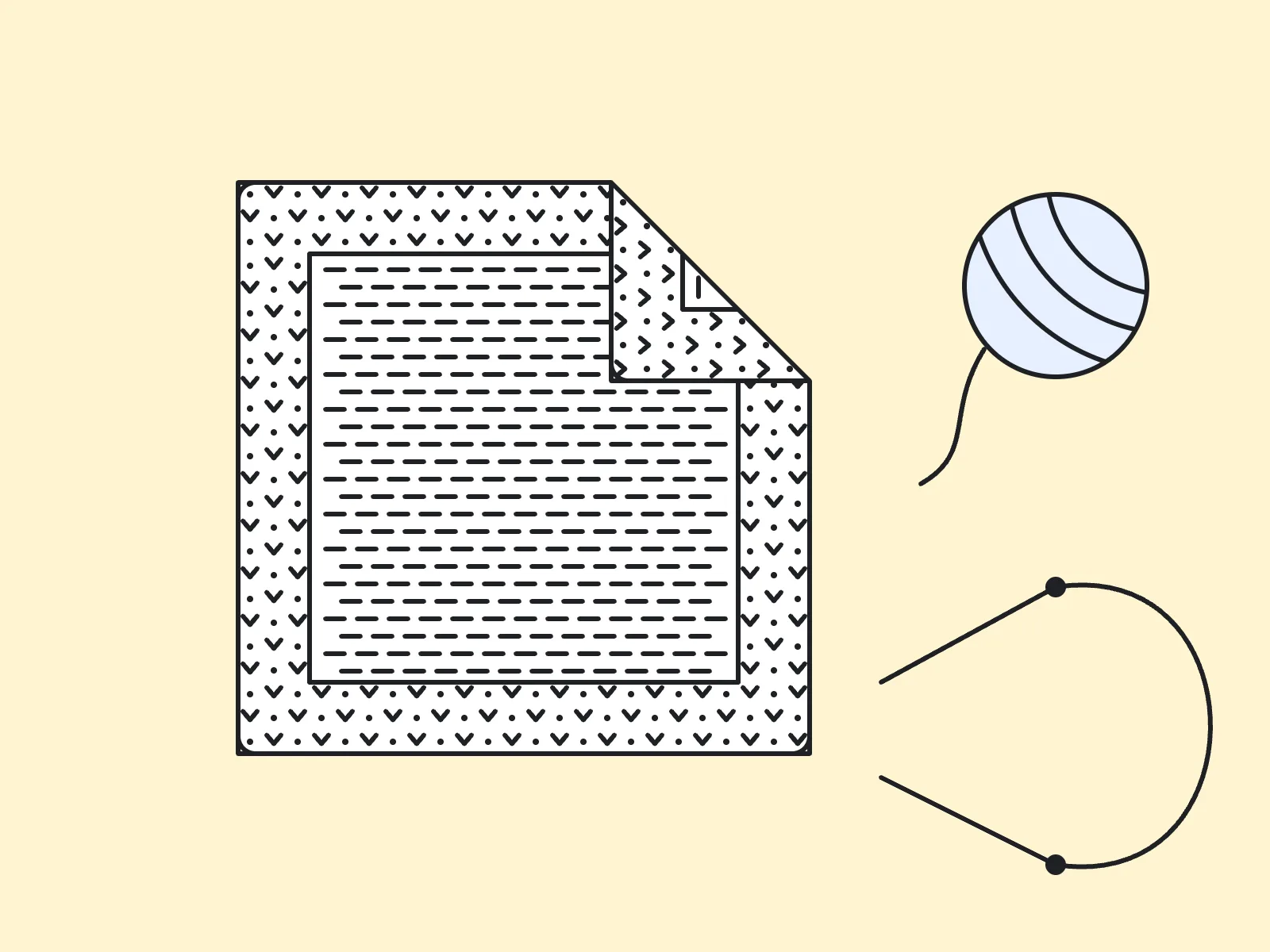
This free baby blanket knitting pattern is the Little Field Baby Blanket: garter stitch in the middle, a seed stitch border all round, about 30 × 34 in (76 × 86 cm). You knit it back and forth on one circular needle, and a single repeated row makes the whole middle.
- Knitting
- Beginner
About this pattern
A garter-stitch baby blanket (knit every row) with a seed-stitch border, about 30 × 34 in (76 × 86 cm). Worsted yarn, about 1,000 yds; a 32 in circular needle used back and forth. 306 rows, one page.
1 page, US Letter, prints in black and white. The pattern is written in English.
© 2026 Row & Round · Free for personal use
What you'll make with this free baby blanket knitting pattern
If you want a free baby blanket knitting pattern that stays calm from cast on to bind off, this is it. The Little Field Baby Blanket is a soft, squishy garter stitch baby blanket. Garter stitch just means you knit every row. It makes tidy ridges and lies flat, so there is no curling to fight.
A seed stitch border frames the ridges. Seed stitch is the pebbly texture you get from knit one, purl one. It finishes the edges neatly and gives the blanket a gentle frame.
It measures about 30 × 34 in (76 × 86 cm). That is 306 rows in all, and the pattern fits on one page. It is a free pattern, free for personal use.
Is this an easy baby blanket knitting pattern for a beginner?
Yes. This is an easy baby blanket knitting pattern, rated beginner. You need two stitches only: knit and purl.
Two rows of instructions do the whole middle. You learn them in the first few inches, then you repeat them. That is why it is restful knitting, and why it makes a lovely first big knitting project.
A blanket is big, but it is not hard. It is the same row, over and over, with a clear start and finish. Gauge is not critical, so you do not need to fuss over it.
There is no shaping, no cables and no colour changes. The only thing to learn is how the border stitches sit, and the pattern below spells it out. If you have knitted a scarf or a dishcloth, you have the skills already. When you are ready for something big, this free baby blanket knitting pattern is a kind place to start.
What you need
Everything on the list is plain and easy to find.
- Yarn: worsted-weight (#4) soft wool blend, cotton or baby acrylic, about 1,000 yds (915 m).
- Needles: US 8 (5 mm) circular needle, 32 in (80 cm) long, used back and forth.
- Notions: tapestry needle; 2 stitch markers (optional) to mark the borders.
Size and gauge
The finished size is about 30 × 34 in (76 × 86 cm).
Gauge: 18 sts and 36 rows = 4 in (10 cm) in garter stitch. Gauge is not critical; a different gauge changes the size and the yarn used.
So if you knit tighter, the blanket comes out smaller and uses less yarn. If you knit looser, it comes out bigger and uses more. The pattern calls for about 1,000 yds (915 m) of worsted yarn. Check the yardage on your ball band and add up the balls before you start.
Abbreviations
There are only a few, and you know most of them already.
- k: knit
- p: purl
- rep: repeat
- st(s): stitch(es)
- *: repeat the instructions after the * as directed
- ( ): repeat the instructions in parentheses as many times as directed
Why a circular needle, back and forth?
A blanket has too many stitches for a straight needle. Your cast on is 135 stitches, and they would crowd the needle and slide off the end.
A 32 in (80 cm) circular needle holds all of them in its cable. You do not join in the round. Work flat, back and forth, and turn at the end of every row, as you would with straight needles.
The weight of the blanket rests in your lap instead of on your wrists. That is what makes a big project comfortable.
A 32 in cable is the length the pattern asks for. A shorter cable will bunch the stitches up, and the rows will be harder to turn.
The pattern
Worked flat, back and forth, on a long circular needle that holds all the stitches. Markers after the first 7 sts and before the last 7 sts make the border easy to see.
- Cast on 135 sts loosely.
- Lower border. Rows 1–10: *K1, p1; rep from * to the last st, k1.
- Body. Rows 11–296: (K1, p1) 3 times, k1, knit to the last 7 sts, (k1, p1) 3 times, k1.
- Upper border. Rows 297–306: *K1, p1; rep from * to the last st, k1.
- Finishing: Bind off loosely in pattern (knit the knits and purl the purls).
- Finishing: Weave in the ends. Wash and lay flat to dry, patting it into shape.
How garter and seed stitch sit together
The border stitches are the same on every row: knit the stitches that face you as purl bumps and purl the ones that face you as knit Vs, and they turn into seed stitch.
Say you start a row with k1. The next stitch is a p1, then a k1, and so on. On the way back, you meet the bumps and the Vs the other way round, so you do the opposite and the pebbles line up.
In the body, the 7 stitches at each end are worked this way. Everything between them is knit, row after row, which is the garter stitch.
The cast on has an odd number of stitches, 135. That is what lets each seed stitch row begin and end with a knit stitch.
Tips for keeping count over 306 rows
The body is 286 rows. That is a lot of the same row, so it is easy to lose your place.
Use the two stitch markers. Put one after the first 7 stitches and one before the last 7. They show you where the seed stitch stops and the garter stitch starts, so you can see a slip at a glance.
Count the border rows as you go. Rows 1 to 10 are the lower border, rows 11 to 296 the body and rows 297 to 306 the upper border. Know which one you are in.
Garter stitch ridges help too. Each ridge is two rows, so you can count the ridges and double the number.
If you lose count, do not panic. Gauge is 36 rows to 4 in (10 cm), so the length of your work tells you roughly where you are. Measure against the row count, then check the border stitches and carry on.
Do not rush the bind off. Bind off loosely in pattern so the top edge stretches as much as the cast on edge does.
Following it in Row & Round
A long, repeated row is where a row counter earns its place, and a free baby blanket knitting pattern this size has plenty of rows to count. In Row & Round, you open the PDF and a highlighter bar sits on your row, with the few lines around it easy to read.
Tap +1 and the count and the bar move down together. Undo is always one tap away, and your place is saved on every tap. So you can put the blanket down mid-body, and pick it up again later without counting back.
You can also set an alert on a row you want to be warned about, such as the start of the upper border at row 297.
Questions
- Is there a free baby blanket knitting pattern for beginners?
- Yes. The Little Field Baby Blanket is a free pattern, free for personal use. It uses knit and purl only, and two rows make up the whole middle.
- What yarn does the Little Field Baby Blanket use?
- Worsted-weight (#4) soft wool blend, cotton or baby acrylic, about 1,000 yds (915 m). You also need a US 8 (5 mm) circular needle, 32 in (80 cm) long.
- How big is the blanket?
- About 30 × 34 in (76 × 86 cm). The gauge is 18 sts and 36 rows = 4 in (10 cm) in garter stitch, and it is not critical.
- How many stitches do I cast on?
- Cast on 135 sts loosely. The first and last 7 stitches of every body row are the seed stitch border, and the rest is garter stitch.
- Why do I work back and forth on a circular needle?
- The long cable holds all the stitches comfortably. You work flat, back and forth, and do not join in the round.
- How many rows is the blanket?
- 306 rows: 10 for the lower border, 286 for the body and 10 for the upper border.