
Five little beaded bags from the 1840s, knit and crocheted
Beaded purse patterns for knitting and crochet: five small bags adapted from 1840s needlework books, two knitted and three crocheted, with a bead count for every beaded section. They run from a striped pouch with no beads at all to a round evening bag with a seven-pointed star on its base.
- Knitting and crochet
- 5 patterns
- $4.99 in the app
What’s in Beaded Purses & Little Bags
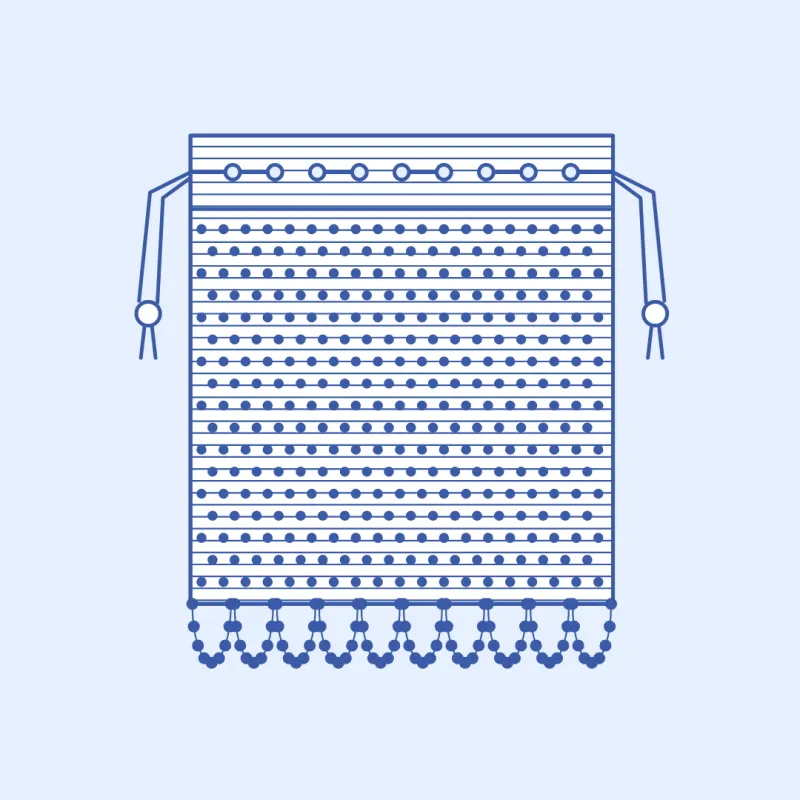
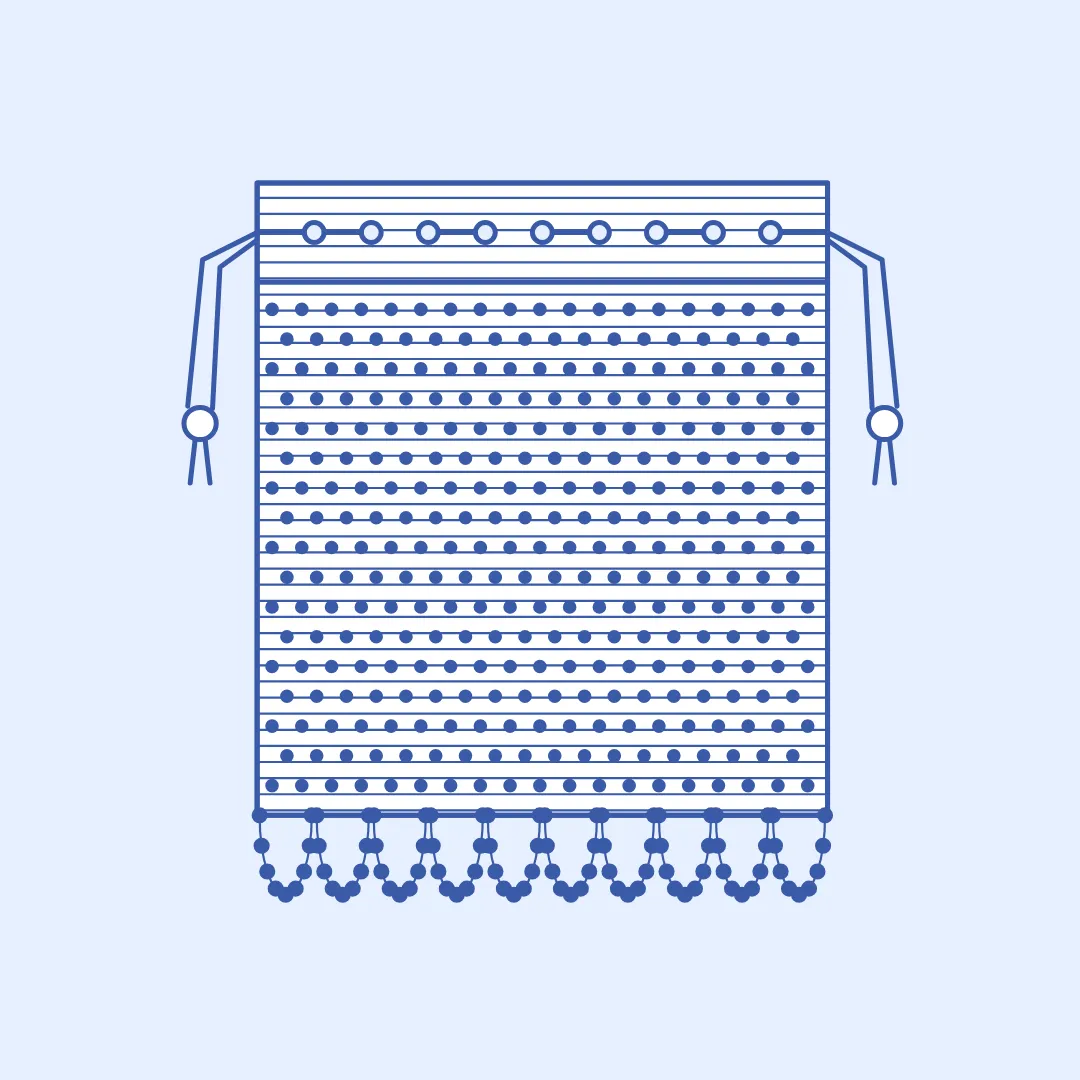
Garnet Bead Drawstring Bag
Garter-stitch bag with beads laid in a brick pattern, a looped bead fringe and two drawstrings. Knitted flat in one piece, folded at the bottom. About 6¼ × 7 in (16 × 18 cm).
Intermediate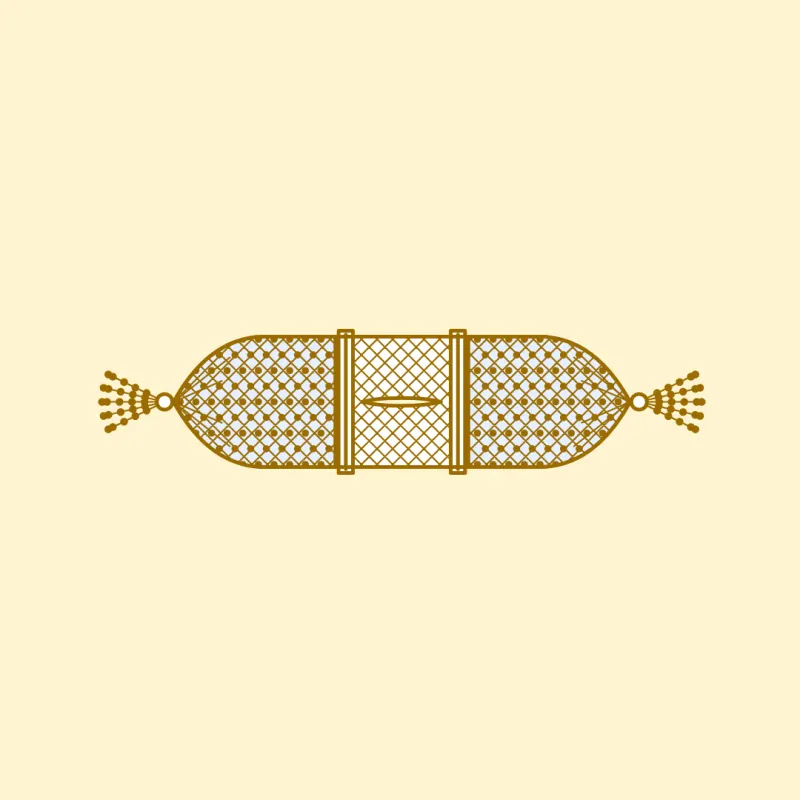
Beaded Miser’s Purse
A long mesh purse, beaded at both ends and plain in the middle where the slit sits, with two rings and a bead tassel at each end. About 3½ in (9 cm) across, 8 in (20 cm) long.
Easy to intermediate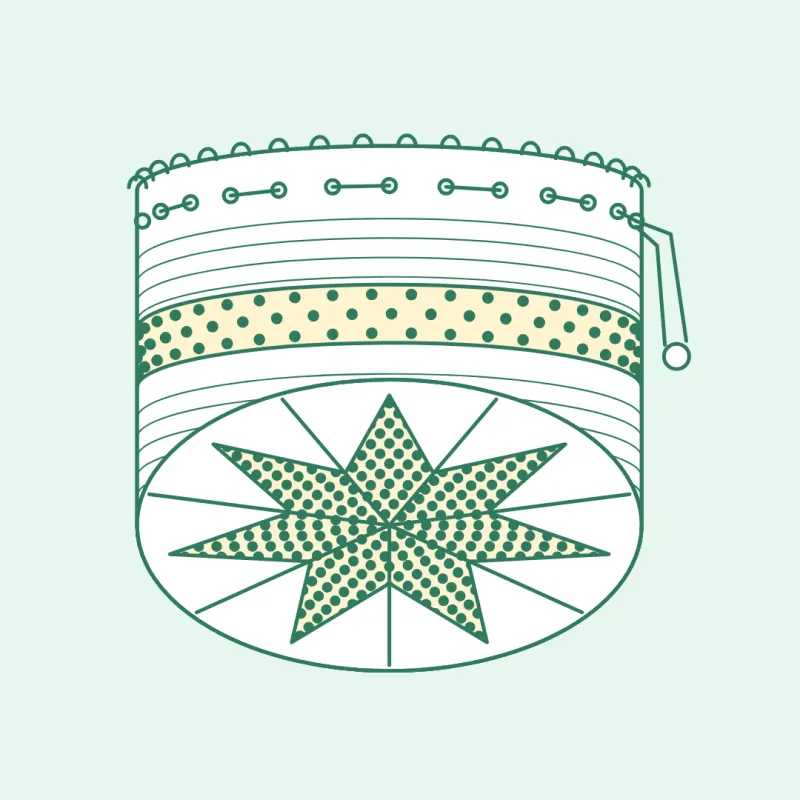
Star-Bottom Evening Bag
A round crocheted bag whose beaded base thickens, then thins into a seven-pointed star. Two bead bands, a row of eyelets, a picot edge. Base about 5½ in (14 cm) across.
Intermediate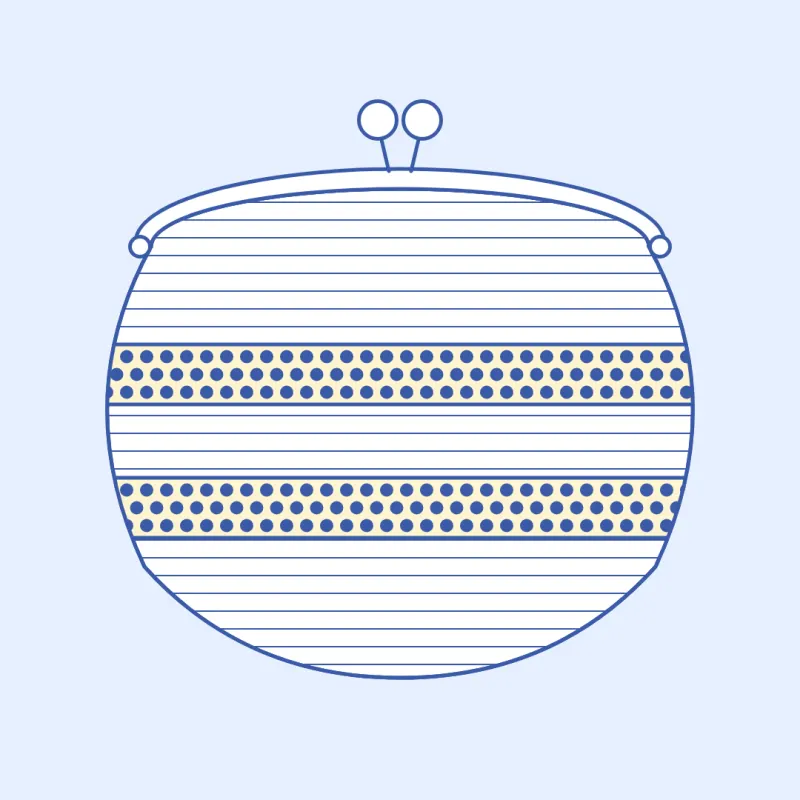
Beaded Clasp Purse
A round-bottomed coin purse in single crochet with two bands that carry a bead on every stitch, sewn into a 3 in (7.5 cm) frame. About 3½ in (9 cm) wide, 4 in (10 cm) deep.
Easy to intermediate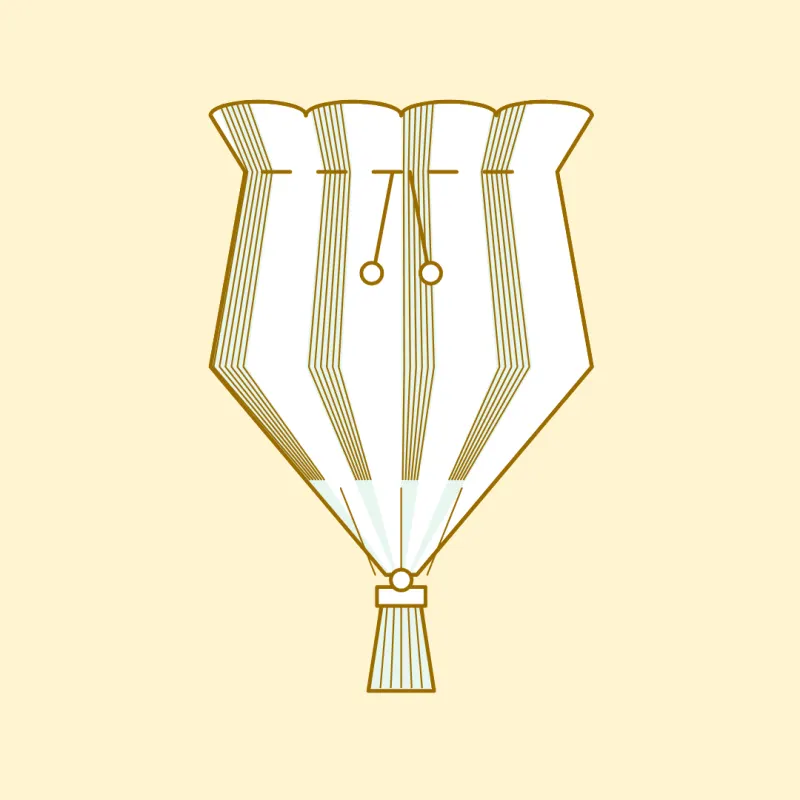
Beginner’s Striped Pouch
A gathered pouch in plain single crochet, stripes of three rows and five rows, drawn up with a cord and finished with a tassel. No beads. About 6½ × 7 in (16.5 × 18 cm).
Easy
Open the pattern book in Row & Round
Beaded Purses & Little Bags is a pattern book in the Row & Round app: $4.99, a single purchase that is yours to keep. Other countries see their local price.
Which of the five to start with
Start with the Beginner’s Striped Pouch if you have never worked with beads, or with the Beaded Clasp Purse if you want beads straight away. The pouch is one stitch, two colours and no shaping. The clasp purse puts a bead on every stitch of two short bands, which is the quickest way to learn how a bead sits against the stitch.
The Beaded Miser’s Purse and the Beaded Clasp Purse sit between Easy and Intermediate. The Garnet Bead Drawstring Bag and the Star-Bottom Evening Bag are Intermediate, mostly because there is more to keep track of: a brick of beads in one, a star in the other.
“Knit one with a bead”: the 1843 bag, rethought
The drawstring bag starts from a short paragraph in Miss Lambert’s 1843 knitting book: “Third row, slip one; knit one with a bead; knit one.” Two plain rows, then a bead row, over and over, on 88 stitches of claret netting silk.
The book never says how a bead gets into a stitch, so this version decides for you: the bead goes in front of a slipped stitch. It also drops to 41 stitches for fingering-weight cotton, and spaces the bead rows every fourth row, always on the right side, with the second bead row shifted by one stitch. That shift is what makes the brick pattern, and the beads stay on the outside of the bag.
Each side carries its own bead count, so you know how many to thread before you cast on. The fringe is extra. The original closed with two bars and a gold chain; this one has a row of eyelets at each top edge and two drawstrings.
Why the miser’s purse is beaded only at the ends
Mlle Riego’s 1846 knitted purse is two rows repeated until the piece is 8 inches long, then sewn up with a gap left in the side. Her instructions end with one line of advice: “The long bead tassels suit this purse best.”
In her version the beads run all the way along, two slipped down for each yarn over. Here there is one bead per yarn over, and they sit only in the two end sections, 2¾ in each. The middle, where the slit is, stays plain mesh, so the opening is not weighed down. Two 1 in (2.5 cm) rings slide along the purse, and the tassels, which the original only hints at, are written out in full.
The mesh is a yarn over and a decrease on every row, so it is worth knitting a few inches in plain yarn first to see whether you like the drape.
Counting the star on the evening bag’s base
Miss Lambert’s star bottom is one dense paragraph. A ring of fourteen chain stitches, then “every other stitch is to be made a seam or dividing stitch”, which means two stitches in one place, stacked round after round until “eight circles are formed”. After that the beads are thinned, one fewer in each division every round.
Her base is bigger than a small evening bag wants, so this one has six solid bead rounds and six thinning rounds instead of eight and eight. The ring is 7 chains with 14 single crochet worked into it, which gives seven dividing lines and so seven points. Where the beads thin, they are left out from both sides of each division in turn, so what remains stays centred and the points stay even. That reading is ours; the book only says to leave one out.
The thinning rounds are where a lost count costs you the star. Put the bar in Row & Round on the first thinning round and the bead number for each round is waiting there.
The sides are not Lambert’s. They follow Marie Jane Cooper’s beaded bags: plain rounds, a three-round bead band, an eyelet round for the cord, a single bead round and a picot edge.
A coin purse and a pouch from the same book
Both come from Miss Lambert’s crochet sampler, and both hold up to their old description. Of plain crochet purses she writes that they “are exceedingly strong”. Her stitch called plain is today’s single crochet.
The clasp purse keeps her instruction to work the base round and round, “increasing by means of dividing lines”, then splits the body in half and works each half back and forth for 8 rows, a depth the book leaves to “the depth of the snap”. The two bead bands, three rounds each with a bead on every one of 42 stitches, come from Mlle Riego’s bead purses. Buy the 3 in (7.5 cm) sew-on frame before you start so you can check the opening.
The pouch keeps her stripes exactly: three rows of one colour, five of the other. The original chain was 140 stitches, a long silk purse. This one is 32 stitches high in DK cotton, sewn into a tube, gathered at the bottom with a tassel and closed at the top with a woven cord.
Yarn, hooks, beads and finished sizes
Four bags use fingering-weight (#1) mercerised cotton, and the miser’s purse can also be made in silk. The pouch uses DK-weight (#3) cotton. Beads are size 6/0 (4 mm) glass seed beads throughout. Both knitted bags use US 2 (2.75 mm) needles, the three beaded crochet bags a US C-2 (2.75 mm) hook, and the pouch a US G-6 (4.0 mm) hook.
Amounts below are estimates, so buy a few extra beads. A big-eye beading needle makes threading far less tedious, and a lining is optional on the drawstring and evening bags.
- Garnet Bead Drawstring Bag: about 160 yd (146 m) of yarn and about 830 beads including the fringe. About 6¼ × 7 in (16 × 18 cm), without the fringe.
- Beaded Miser’s Purse: about 90 yd (82 m) and about 610 beads including the tassels, plus two 1 in (2.5 cm) metal rings. About 3½ × 8 in (9 × 20 cm), slit 2½ in (6.5 cm).
- Star-Bottom Evening Bag: about 160 yd (146 m) and about 480 beads. Base about 5½ in (14 cm), 17½ in (44.5 cm) around, 4½ in (11.5 cm) tall above the base.
- Beaded Clasp Purse: about 45 yd (41 m) and about 252 beads, plus a 3 in (7.5 cm) sew-on frame. About 3½ × 4 in (9 × 10 cm).
- Beginner’s Striped Pouch: about 50 yd (46 m) of colour A, about 60 yd (55 m) of colour B, and a small piece of card for the tassel. About 6½ × 7 in (16.5 × 18 cm) before gathering.
The old books behind the five bags
The patterns are adapted from three public-domain books of the 1840s and are rewritten rather than reprinted, with gauge, bead counts and charts added. Each pattern credits the book it came from.
The old texts use terms that have shifted: “plain” crochet is single crochet, “make 1” in the knitting is a yarn over, and a “seam or dividing stitch” is an increase.
- Garnet Bead Drawstring Bag: adapted from Miss Lambert (1843).
- Beaded Miser’s Purse: adapted from Mlle Riego (1846).
- Star-Bottom Evening Bag: adapted from Miss Lambert (1847), with the sides after Marie Jane Cooper (1840s).
- Beaded Clasp Purse: adapted from Miss Lambert (1847), with bead bands after Mlle Riego (1846).
- Beginner’s Striped Pouch: adapted from Miss Lambert (1847).
Questions
- Do I thread all the beads before I start?
- Yes, for the beaded sections. Each side, end or band has its own bead count, so thread that number first, and a big-eye beading needle makes the job quicker. Buy a few spare beads in case of a bad one.
- Why does the evening bag’s star have seven points?
- The base starts from a ring of 14 single crochet, and every second stitch becomes a dividing stitch. That gives seven dividing lines, and the thinning bead rounds follow them.
- Can I make the miser’s purse in silk?
- Yes. It is the one bag that allows either fingering-weight mercerised cotton or silk. Check your gauge first, because the mesh is loose and the drape changes with the fibre.
- Do the bags need a lining?
- Only the drawstring bag and the evening bag mention one, and it is optional on both. The other three are worked to stand or hang without.
- Are these the original 1840s patterns?
- No. The originals gave stitch counts in netting silk and left out gauge, bead sizes and charts. These are rewritten for modern yarn, hooks and 6/0 beads, with counts that have been checked row by row.
Open the pattern book in Row & Round
Beaded Purses & Little Bags is a pattern book in the Row & Round app: $4.99, a single purchase that is yours to keep. Other countries see their local price.