
Two sweaters, two cloches and a scarf from the 1920s
These 1920s knitting patterns are five designs from a 1920 booklet and another of about 1923, rewritten for modern yarn: two sweaters, two crocheted cloches and a striped scarf. The sweaters come in five sizes, the cloches in three. Each keeps the shape its old page gave it.
- Knitting and crochet
- 5 patterns
- $4.99 in the app
What’s in Roaring Twenties Sweaters & Cloches
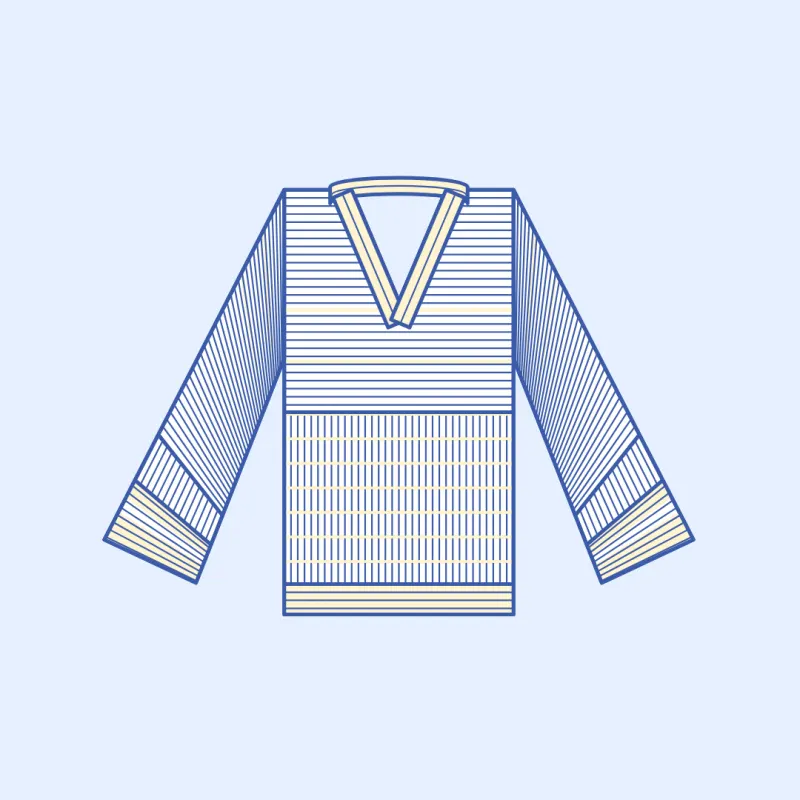
Wide Collar Pullover
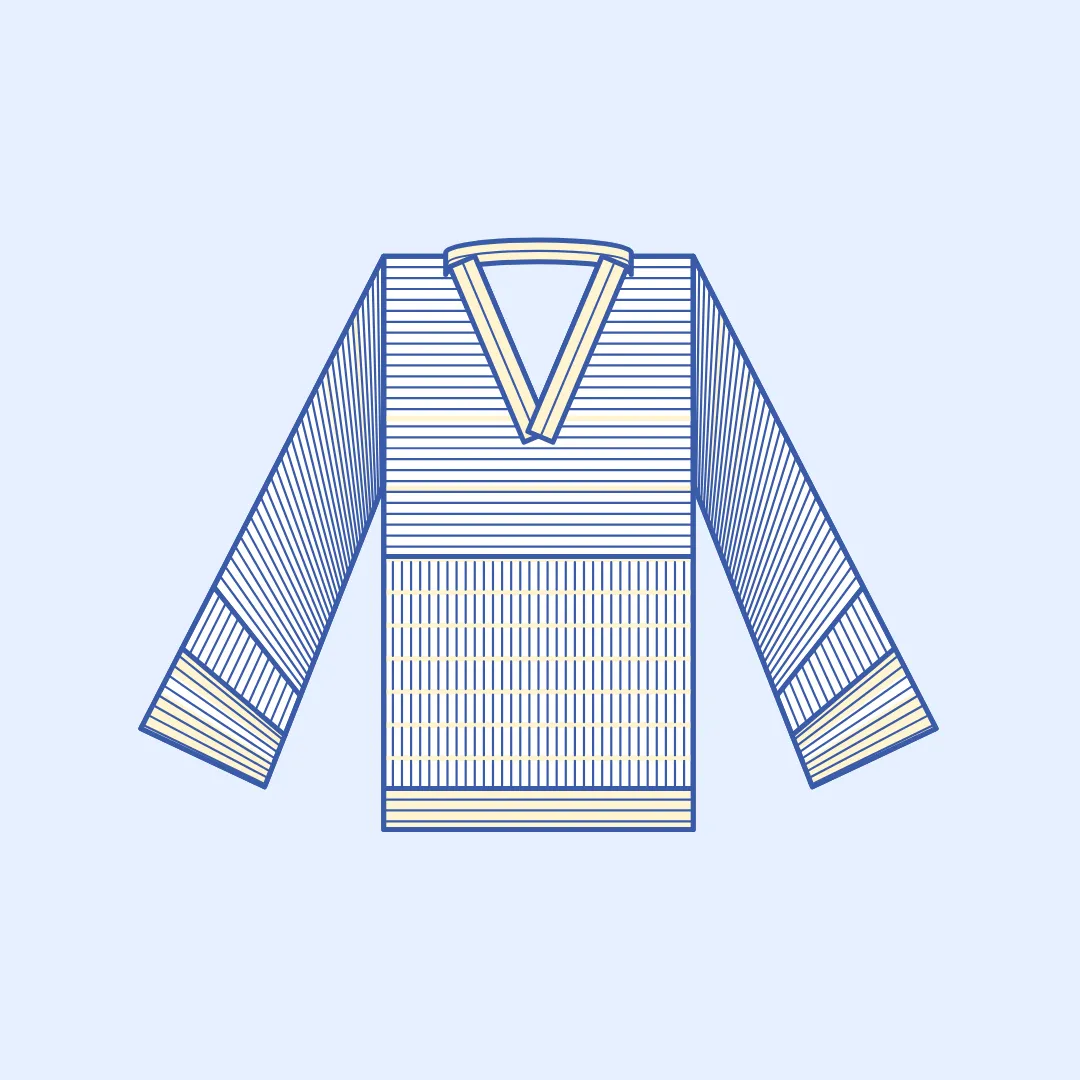
Loose and hip-length, knitted flat in one piece over the shoulders. Rib bands with raised ridges, a V neck, striped cuffs and a garter collar that rolls itself. XS–XL. Intermediate.
Intermediate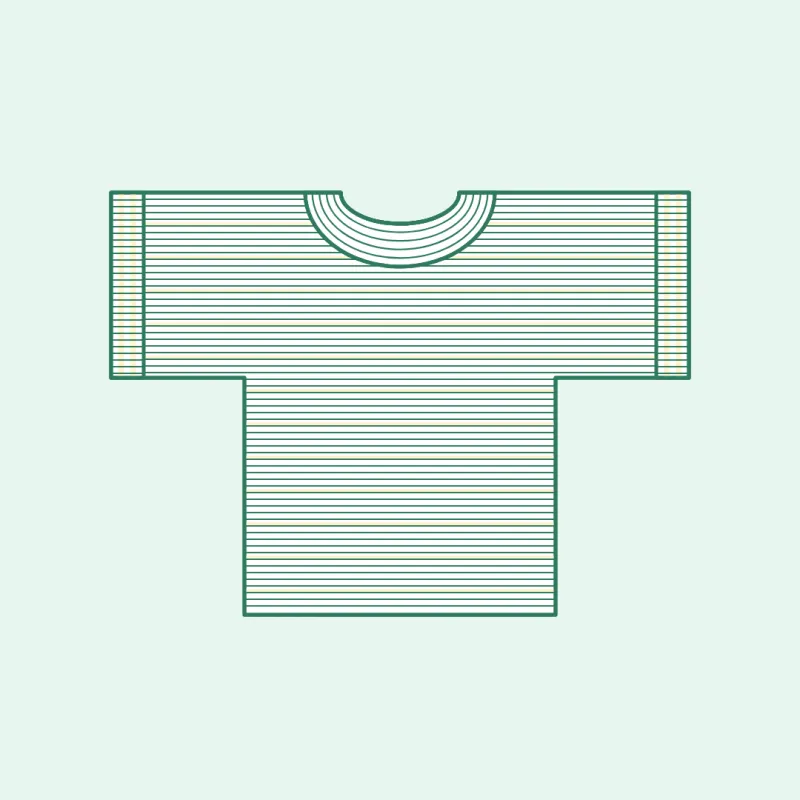
Striped Garter Slip-On
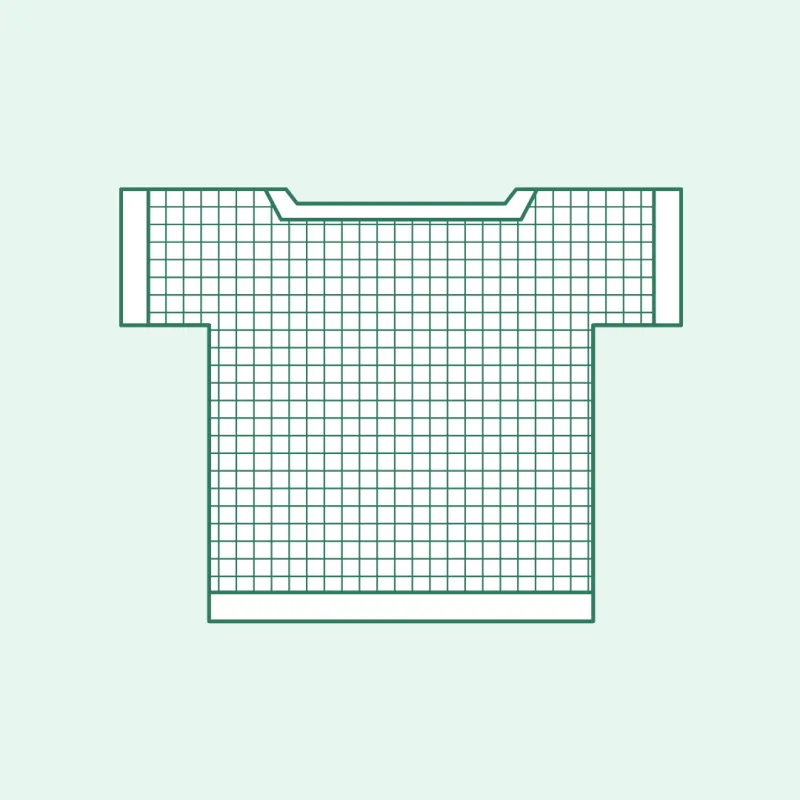
A boxy chunky T in garter stitch: one narrow stripe to every four of the main colour, elbow-length sleeves knitted in, a shaped collar. XS–XL. Easy.
Easy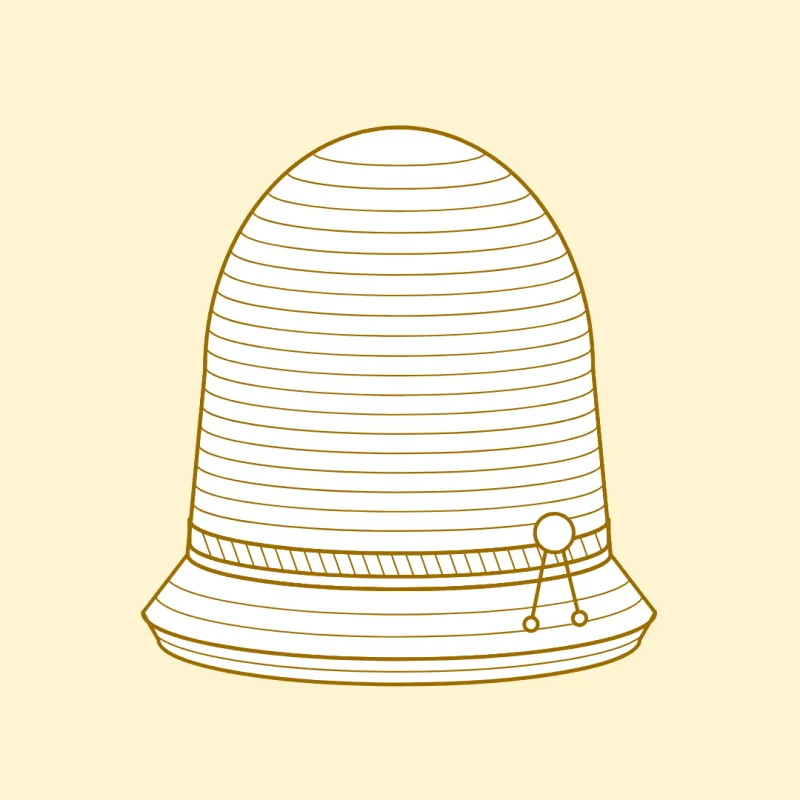
Deep-Crown Cloche
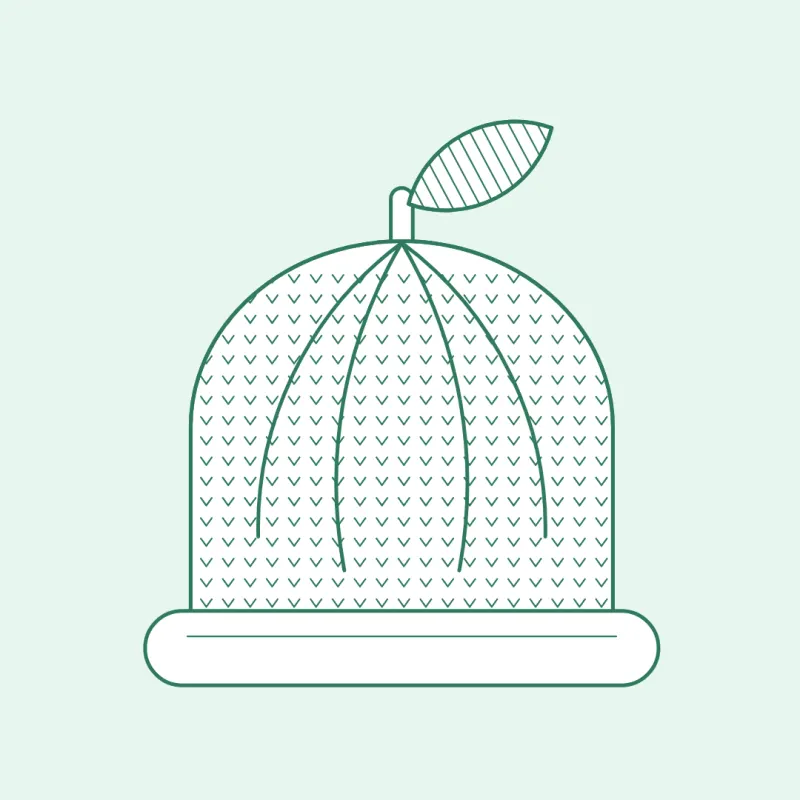
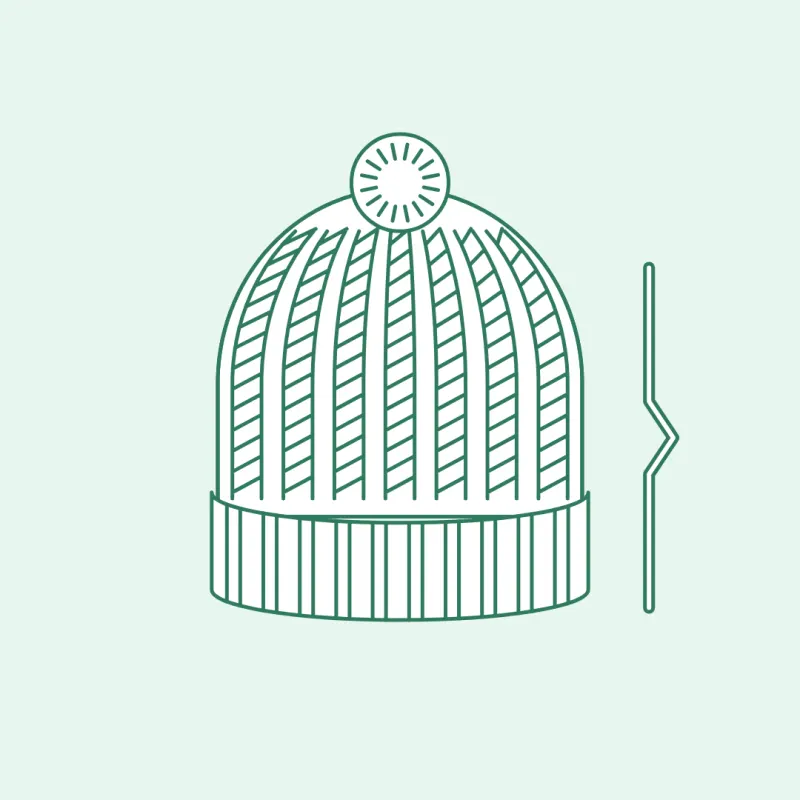
A bell-shaped cloche crocheted in a spiral of single crochet from the top down, with a brim that flares and a twisted cord round the crown. S, M, L. Easy.
Easy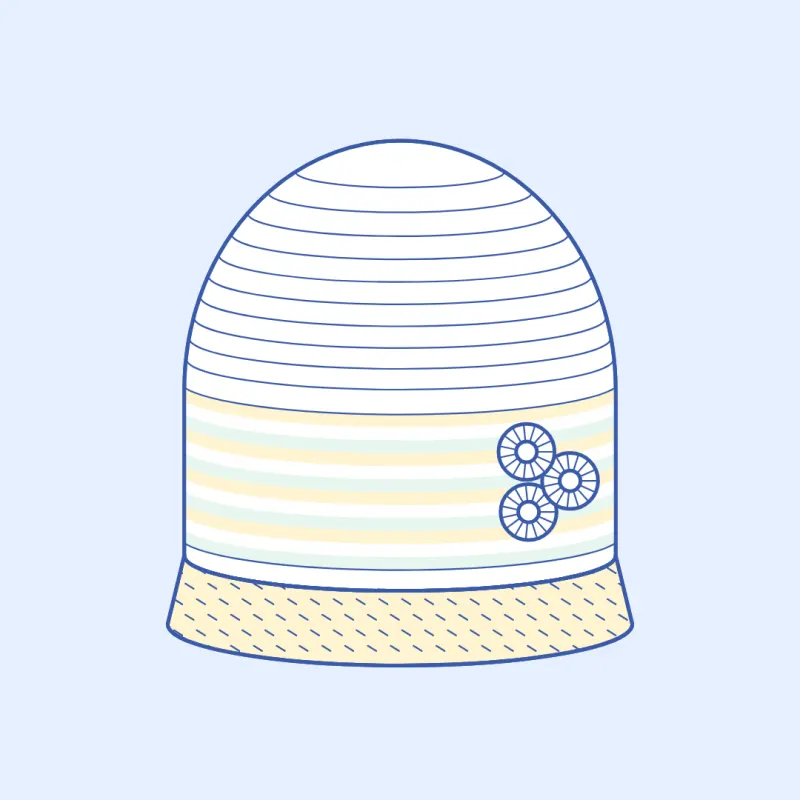
Three-Colour Banded Cloche
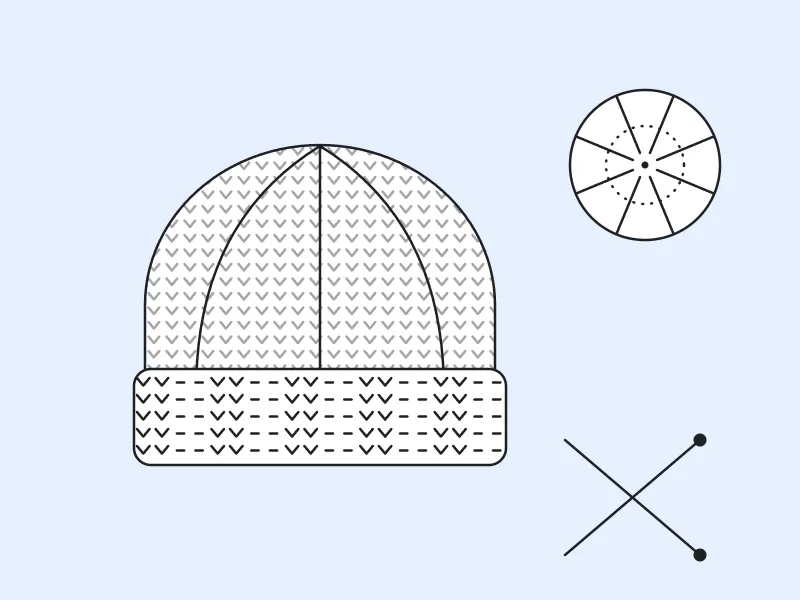
A close cloche crocheted in joined rounds, with a run of narrow stripes in three colours and a short marled brim. S, M, L. Between Easy and Intermediate.
Easy to intermediate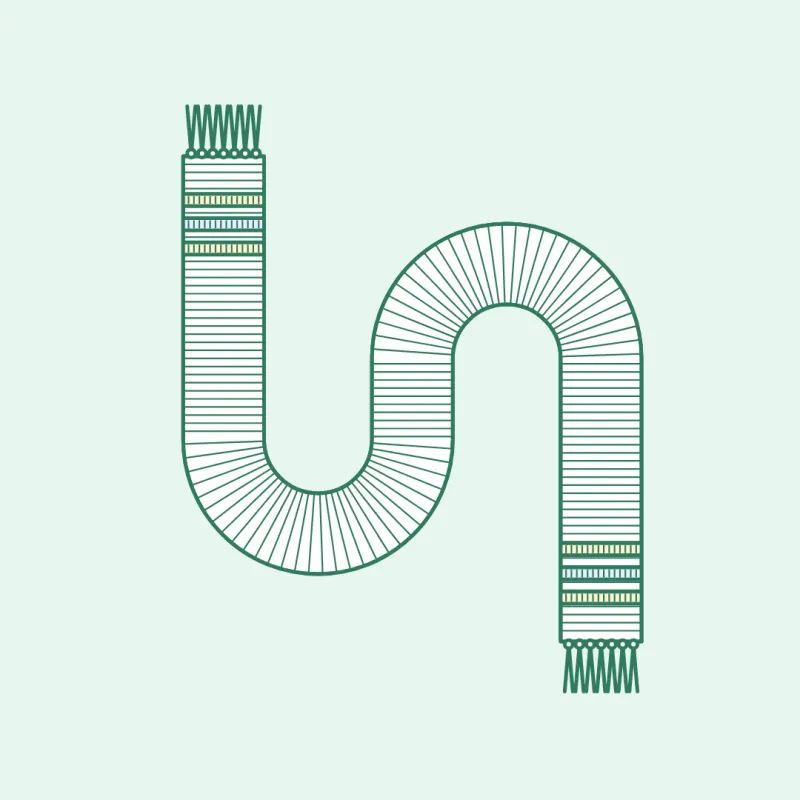
Three-Colour Stripe Scarf
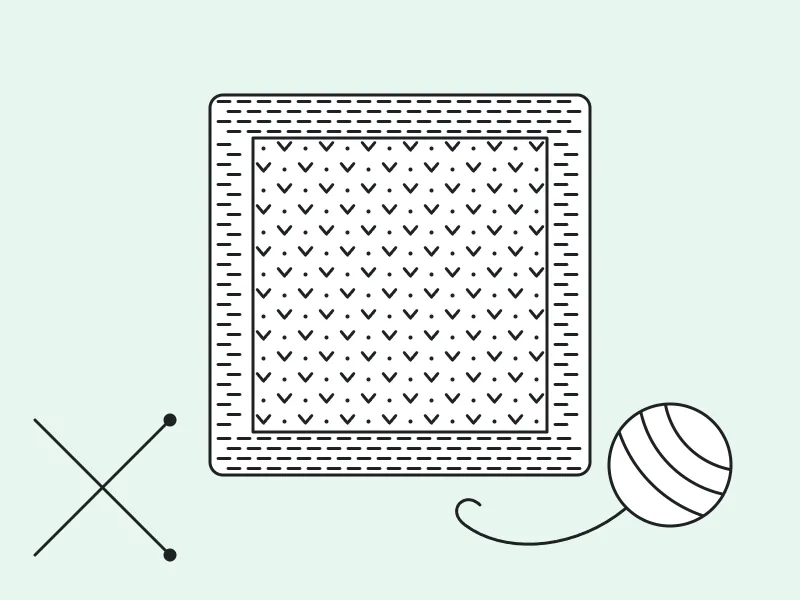
A long garter-stitch scarf with textured bands at each end and a knotted fringe in three colours. One size. Easy.
Easy
Open the pattern book in Row & Round
Roaring Twenties Sweaters & Cloches is a pattern book in the Row & Round app: $4.99, a single purchase that is yours to keep. Other countries see their local price.
A 1920 pullover that counts in ridges
The oldest pattern here opens with a small puzzle. The 1920 text says "Knit 8 ribs or 16 rows", so a rib in that booklet is a garter ridge, two rows, and the k2, p2 ribbing goes by another name. Hold that in mind and the rest reads cleanly.
The original is one size on 80 stitches, in "10 Balls Turquoise Vicuna Yarn" with black for the stripes. Ours is DK wool, graded from XS to XL, with about 6 in (15 cm) of ease. You knit it flat in one piece, up the back, over the shoulders and down the front, then pick up the sleeves along the sides.
Two things moved. The old pullover has six rib bands and ours has seven, so it reaches the hip in every size. And the neck: 1920 binds off 20 of 80 stitches, a quarter of the row, then says to increase "every other row until neck is open as far as required". Here you bind off 34 [34, 38, 38, 42], knit three straight ridges, and add a stitch at each edge on every right-side row until the two sides meet at the point of the V. Two balls of the main colour, one per side.
The collar is a separate garter strip, sewn on last. The old line is still the best instruction: "sew on and collar will roll." Cross the ends at the V, left over right, and never press it flat.
- Yarn: DK (#3) wool or wool blend, about 900 [990, 1070, 1260, 1350] yd (825 [905, 980, 1150, 1235] m) in the main colour and about 260 [280, 310, 340, 370] yd (240 [255, 285, 310, 340] m) in the contrast
- Needle: US 6 (4 mm), 32 in (80 cm) circular, used flat because the back is wide
- Gauge: 20 stitches and 40 rows to 4 in (10 cm) in garter stitch
- Finished chest: 37½ [42½, 45½, 50½, 53½] in (95.5 [107.5, 116, 128, 136] cm), for a bust of 32 [36, 40, 44, 48] in
A cloche written for a wool brush
The Deep-Crown Cloche comes from a page that took a brush for granted. After describing a crown of about 21 inches round, it admits: "The crown may look small, but the brushing stretches it to the proper size." Smooth worsted won't do that, so here the size comes from the stitch count, a finished crown of 19½ [21, 22½] in.
What stays is the spiral of single crochet that never joins, a flat top that grows round and not into points, and straight deep sides, 6¾ [7¼, 7¾] in. The brim changed most. The 1923 page asks for four increase rounds, which would ruffle in a smooth yarn, so there are two, each followed by a plain round, and one decrease round later. A twisted cord ties round the crown, as it did then.
In Row & Round, the round where the increases stop and the straight sides begin is the one to mark, because the stitch count stops changing there.
- Yarn: worsted (#4), about 120 [130, 150] yd (110 [120, 135] m)
- Hook: US H-8 (5 mm)
- Fits a head of about 20 [21½, 23] in (51 [54.5, 58.5] cm). Easy.
Keeping the slip-on's stripes level
Garter stitch from hem to hem, one narrow ridge of colour A to every four of colour B, and nothing to shape except the neck. For a first 1920s garment this is the gentle one.
The 1923 page casts on 40 stitches and adds "10 sts. at each end 3 times for sleeves". Ours casts on 66 [74, 80, 88, 94], and each of the three sleeve steps adds 11 [10, 9, 8, 7], which lands the sleeves at the elbow in every size.
The old text knits the two halves of the front one after the other. Here both sides of the neck are worked together, each with its own balls of A and B, so the stripes meet across the front instead of drifting. The stripe then runs unbroken from the back hem over the shoulder to the front hem, and the front ends on an A ridge, mirroring the cast-on edge. The striped cuffs are picked up afterwards, and the collar starts narrow, widens, runs straight and narrows again.
- Yarn: chunky (#5), about 610 [650, 710, 780, 840] yd (560 [595, 650, 715, 770] m) of B and about 200 [210, 230, 240, 260] yd (185 [190, 210, 220, 240] m) of A
- Needle: US 10½ (6.5 mm), 40 in (100 cm) circular, used flat
- Gauge: 14 stitches and 28 rows to 4 in (10 cm); finished chest 37¾ [42¼, 45¾, 50¼, 53¾] in (96 [107.5, 116, 127.5, 136.5] cm)
The scarf whose instructions disagree
The 1923 scarf contradicts itself. It says to "Repeat these 4 rows until there are 5 ribs of each color", then a few lines on, "Repeat these last 9 ribs 3 times (27 ribs)." Five ridges per group cannot be both. We followed the count of 27, which makes each textured band four ridges, the two contrast colours taking turns.
The bands are knit one, purl one on one row and plain knit on the next, set between garter ends of 18 ridges, with three bands at each end. The old scarf comes to about 108 ridges in all, short enough for a neck. Ours lengthens the middle to 56¾ in (144 cm) long and 9¼ in (23.5 cm) wide, before the fringe.
The fringe is the original method: wind yarn over a 6 in card, then knot one strand of each colour into every other stitch. Gauge is not critical here.
- Yarn: worsted (#4), three colours
- Needles: US 8 (5 mm)
- Easy; one size
Counting the stripe rounds on the banded cloche
This is the cloche that rewards a pencil. Once the crown is 7 in across, the old page gives its stripes as one long run: "1 row Fawn; 2 rows Brown; 1 row Fawn; 1 row Blue" and on, ending "3 rows Brown. This finishes crown." Eighteen rounds in all, and we kept their order exactly.
Two choices are ours. The 1923 text doesn't say whether to join the rounds, so they are joined, which keeps each stripe level. And the brim is worked with a strand each of two colours held together, giving the marled edge, so it takes a larger hook than the crown to make room for the doubled yarn. A last round can enclose a hat wire if you want a firmer brim.
It sits between Easy and Intermediate for the colour changes, not for any difficult stitch.
- Yarn: DK (#3), three colours
- Hooks: US G-6 (4 mm) for the crown, US I-9 (5.5 mm) for the brim
- Sizes S, M, L
Choosing a size, and what to make first
Pick the sweaters by bust, 32 to 48 in (81.5 to 122 cm), then hold the finished chest against a loose sweater you already wear. They are cut roomy, as 1920s sweaters were. A closer fit means going down a size, and gauge matters more than usual.
If you knit and have never made a garment, start with the slip-on. If you crochet, the Deep-Crown Cloche is the plainest of the hats. The pullover is best kept for after a sweater or two, since the sleeves are picked up and the neck needs two balls. The banded cloche and the scarf can be made in the same three colours, as the 1923 page paired them.
Questions
- How loose are the sweaters meant to fit?
- Loose. Both are cut with about 6 in (15 cm) of ease over the bust, the way 1920s sweaters were worn. Choose by bust, then compare the finished chest with a sweater you own. For a closer fit, go down a size and check your gauge first.
- Can I use a different yarn?
- Match the weight each pattern names and check gauge: DK for the pullover and banded cloche, chunky for the slip-on, worsted for the Deep-Crown Cloche and the scarf. The patterns are written for wool or a wool blend, and the yarn amounts are about figures, so buy a little extra.
- Do the cloches need brushing or a hat wire?
- No. The Deep-Crown Cloche originally relied on a brushed novelty yarn to stretch to size, so it is sized by stitch count instead. The banded cloche's last round can enclose a hat wire, but it is optional.
- How long is the scarf?
- About 56¾ in (144 cm) long and 9¼ in (23.5 cm) wide before the fringe. The 1923 original was much shorter, closer to a neck scarf.
Open the pattern book in Row & Round
Roaring Twenties Sweaters & Cloches is a pattern book in the Row & Round app: $4.99, a single purchase that is yours to keep. Other countries see their local price.