
Six Vintage Bedspread Squares, Knitted and Crocheted to 10 Inches
Knitted bedspread squares from 1870 to 1918 are collected here: four knitted and two crocheted designs, each rewritten to finish at about 10 in (25 cm). Mix them into a cushion, a baby blanket or a throw, or repeat a single design until the bed is covered.
- Knitting and crochet
- 6 patterns
- $4.99 in the app
What’s in Heirloom Bedspread Squares
Popcorn Star Square
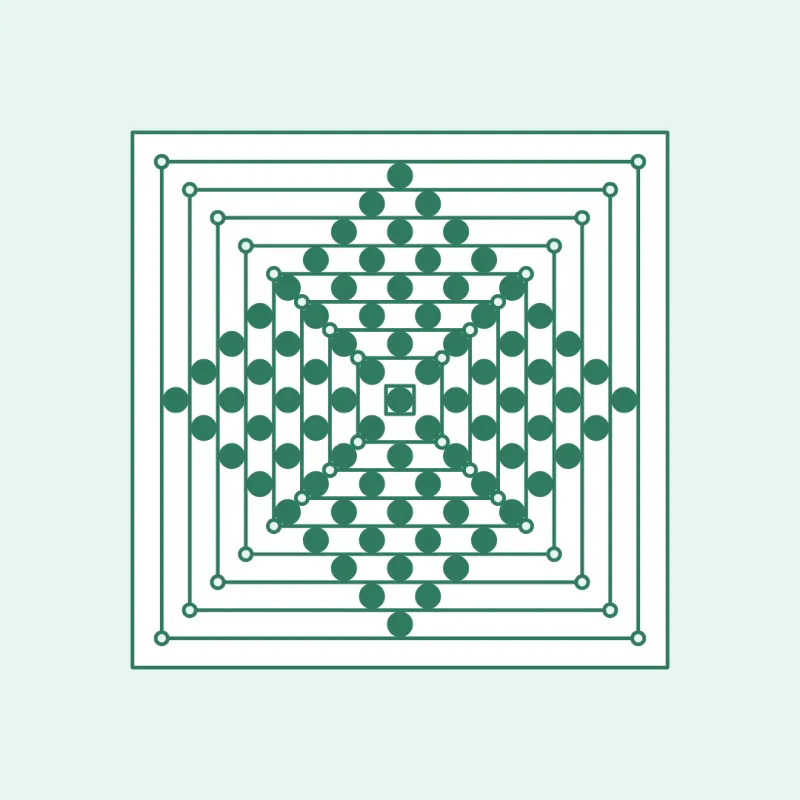
Crochet. Orr's 1918 popcorn star, stopped two rounds after the star closes so it matches its neighbours. Worsted cotton, 4.5 mm hook, intermediate, about 10 in (25 cm).
Intermediate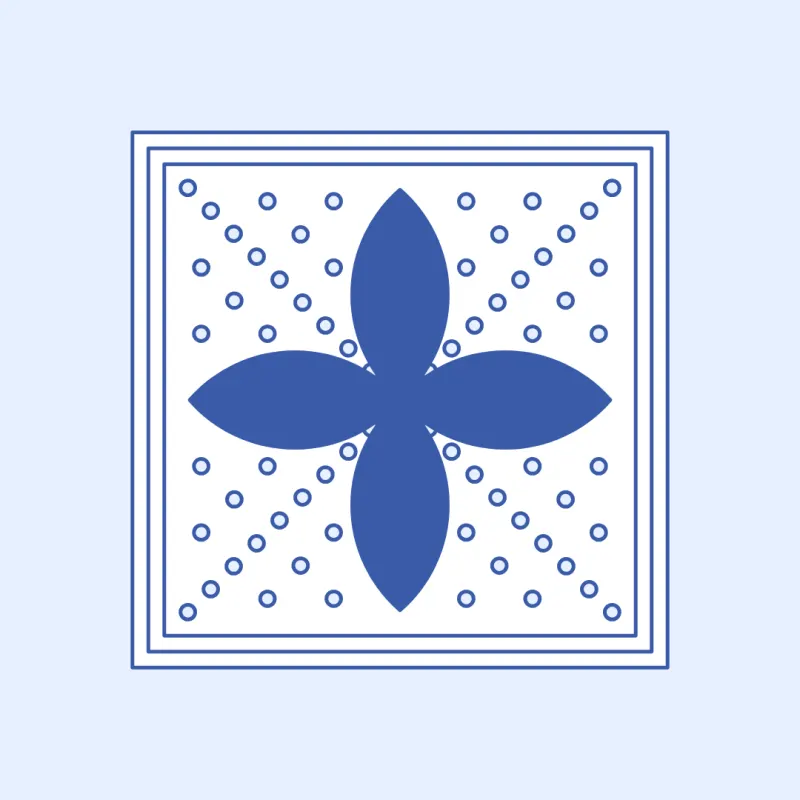
Four-Leaf Lace Square
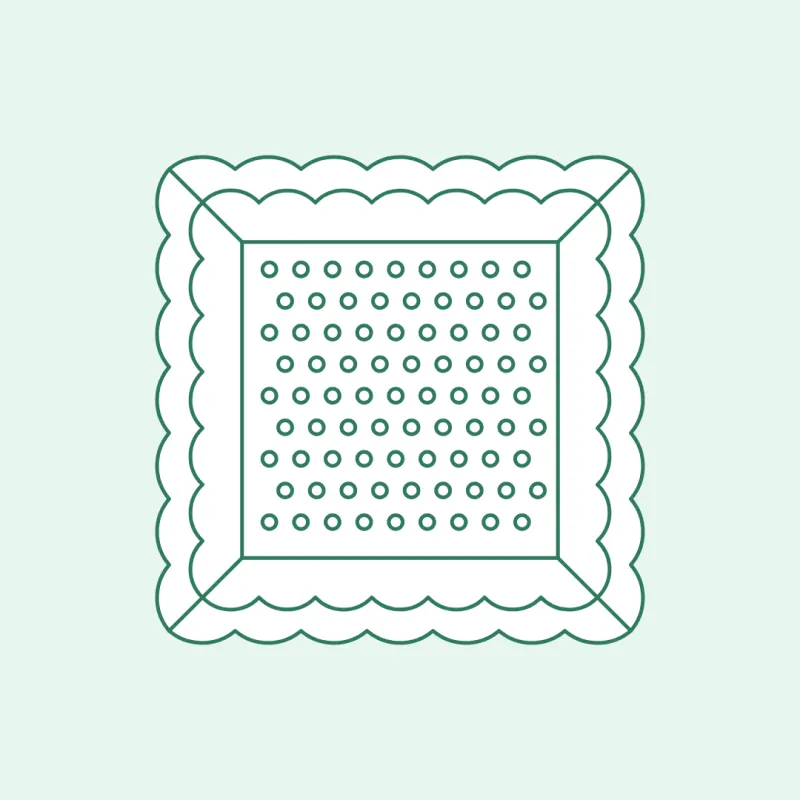
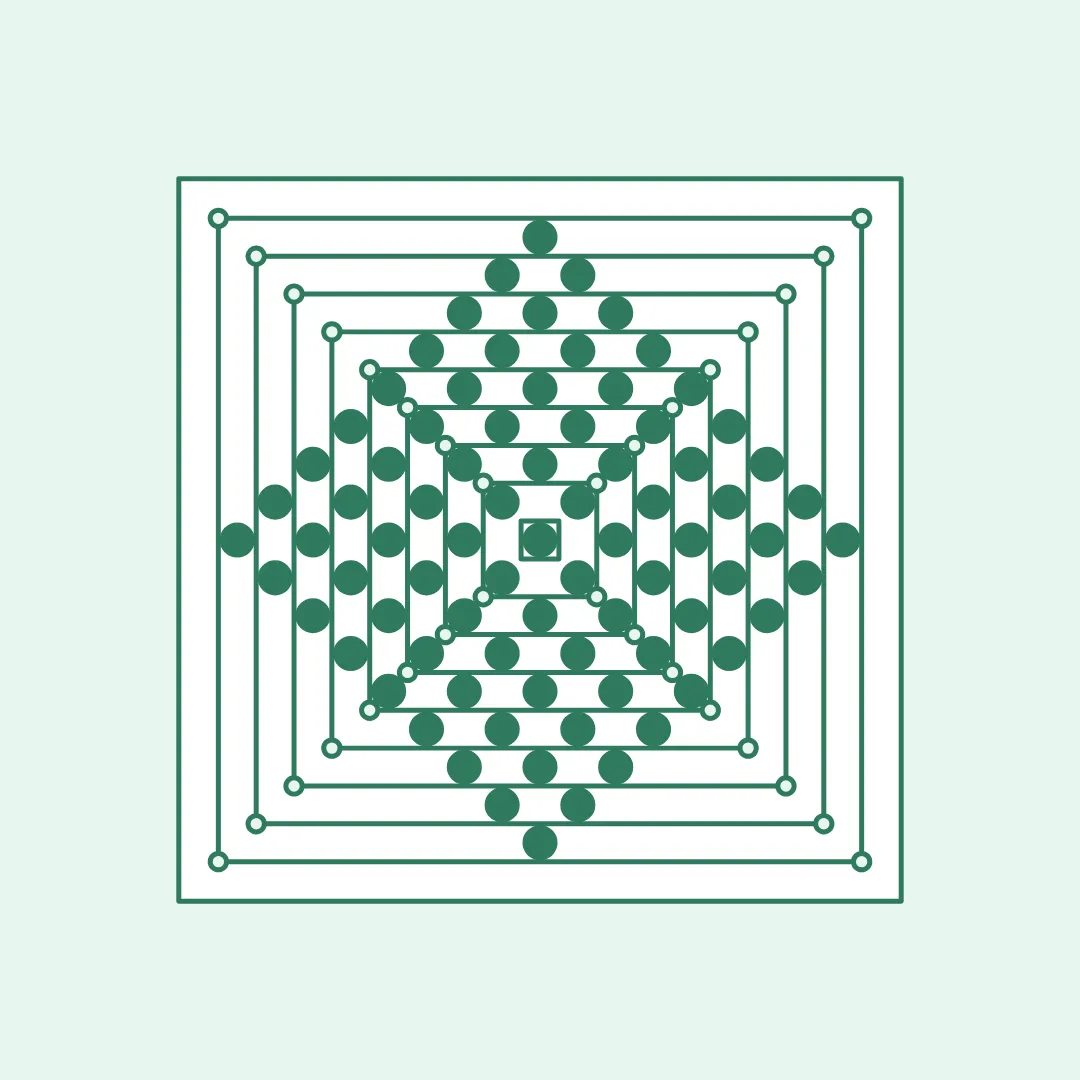
Knit in the round from 8 stitches at the centre: four solid leaves on eyelets, finished with a garter edge. Worsted cotton, intermediate, about 10 in (25 cm) after blocking.
Intermediate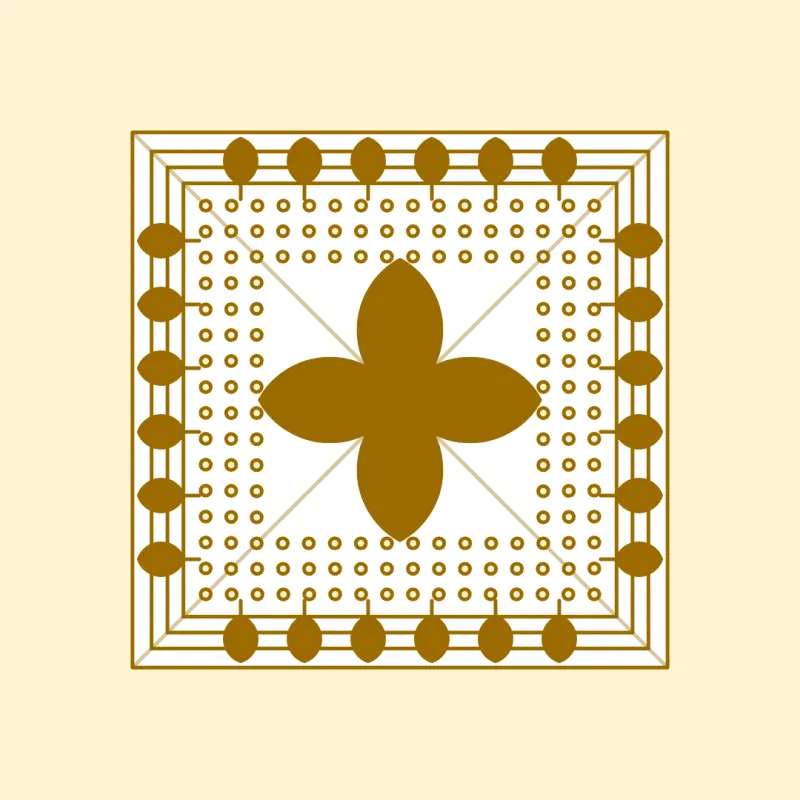
Leaf Border Block
Four knitted triangles sewn into one block, each with a large raised leaf, eyelets and a band of small leaves. Fingering cotton, intermediate, about 10 in (25 cm).
Intermediate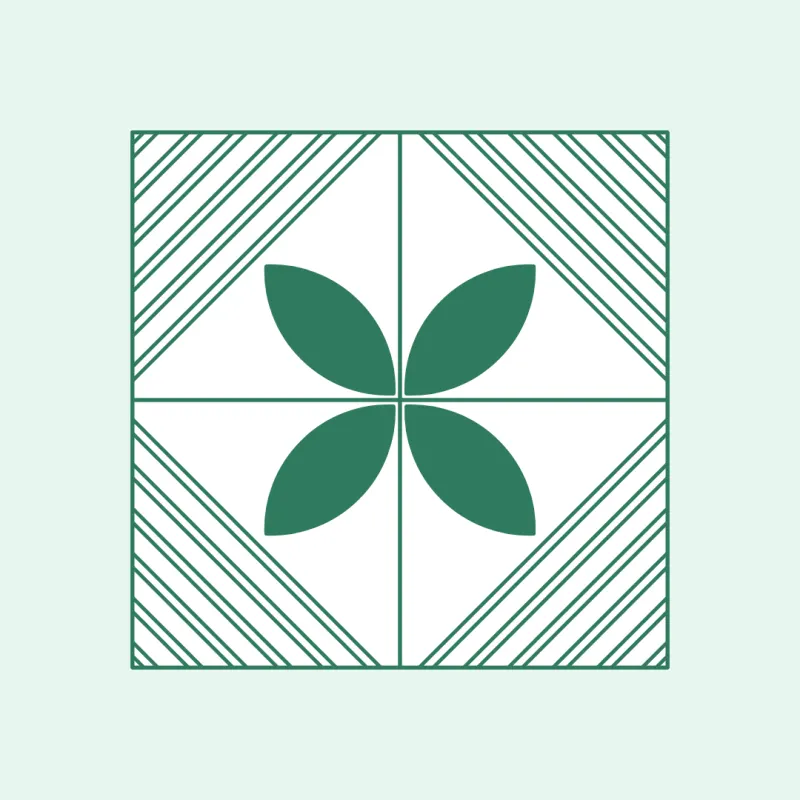
Laurel Leaf Block
Four garter squares knitted corner to corner, each with a smooth laurel leaf and a ribbed half. Worsted cotton, between easy and intermediate; each square about 5 in.
Easy to intermediate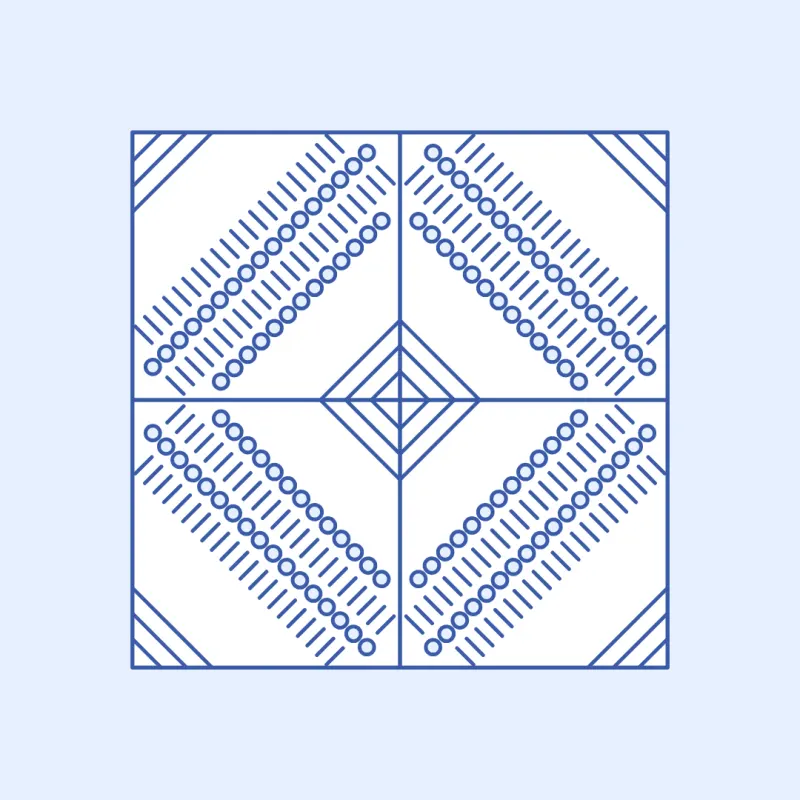
Eyelet Cross Block
Four corner-to-corner squares with eyelet bands and diagonal ribs that meet as a cross. DK cotton, between easy and intermediate; each square about 5 in, block about 10 in.
Easy to intermediate
Solid Single Crochet Square
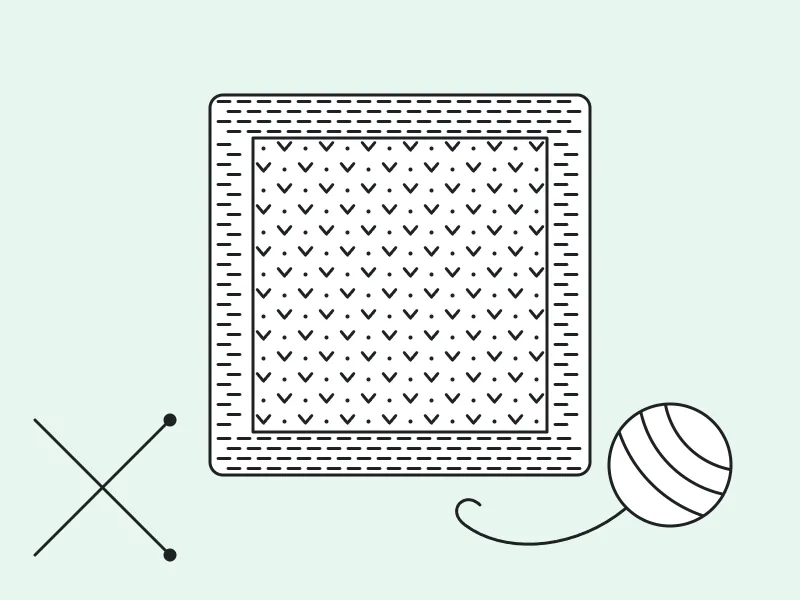
Single crochet in joined rounds, three stitches in each corner, from an encyclopedia of about 1890. Worsted cotton, easy, 20 rounds to about 10 in (25 cm).
Easy
Open the pattern book in Row & Round
Heirloom Bedspread Squares is a pattern book in the Row & Round app: $4.99, a single purchase that is yours to keep. Other countries see their local price.
Six squares that agree on one size
Counterpane squares were made one at a time and sewn together afterwards, which is why the old books hand you a single square and trust you with the rest. Here, every piece is written to finish at about 10 in (25 cm). A lace square can sit beside a plain one without much argument from the blocking pins.
The price of that sameness is yarn. Four designs use worsted cotton, one uses DK and one uses fingering weight, so a blanket of mixed squares means three yarns. Worth knowing before you shop. Amounts below are estimates for one square or block, so buy a little over.
- Popcorn Star Square: about 225 yd (206 m) of worsted-weight (#4) cotton, US 7 (4.5 mm) hook.
- Four-Leaf Lace Square: about 170 yd (155 m) of worsted-weight (#4) cotton, US 7 (4.5 mm) needles.
- Leaf Border Block: about 455 yd (416 m) of fingering-weight (#1) cotton, US 2 (2.75 mm) needles.
- Laurel Leaf Block: about 150 yd (137 m) of worsted-weight (#4) cotton, US 8 (5 mm) needles.
- Eyelet Cross Block: about 210 yd (192 m) of DK-weight (#3) cotton, US 5 (3.75 mm) needles.
- Solid Single Crochet Square: about 155 yd (142 m) of worsted-weight (#4) cotton, US 7 (4.5 mm) hook.
Where the printed numbers stopped adding up
Nobody proofread these books against a pair of needles. Anne Orr's 1918 popcorn square prints side totals of 12, 31, 35, 39 and 43 stitches, yet every corner adds one stitch to each side, so the rounds as written give 13, 29, 33, 37 and 41. We followed the rounds and ended on 41 stitches a side. Her 11th round also asks for two popcorns side by side, which leaves most of the side unworked. We spaced five popcorns three stitches apart instead, which carries on the lattice of the rounds below.
Her popcorn is eight double crochet gathered into one stitch. In worsted cotton we use five, the usual size. And we stop at round 20, two rounds after the star closes. Orr carries on with plain rounds, five rounds of mesh and five of a fancy stitch, which would swell the square well past 10 in. The mesh did not go to waste: it became the border for the whole blanket.
Her Leaf Border Block, from the same book, needed more repair. The third row, "p 1, k 1, o, k 1, p 1", uses four of the five stitches on the needle, and three printed counts disagree with the rows around them. Every count the book prints for rows 28 to 46 came out identical once the misprints were fixed, which is how we knew the repairs were right. The block is four triangles, 80 rows each, in fingering cotton. The old book showed how to sew them together only in a photograph, so that finishing is written out here.
Row & Round keeps your place through the small-leaf band of that block, where the row swings from 53 stitches to 151 and back.
The lace square that starts with eight stitches
The Four-Leaf Lace Square comes from an 1870 English needlework book, which opens it with "cast on 8 stitches, 2 on each needle" and works outward from that tiny ring. The book says once that a plain round follows every pattern round, then adds "We shall not mention this again." It also squeezes rounds 10 to 18 into a single sentence. Here, every round is written out.
Two rounds needed a decision. Round 36 says to knit four stitches together, but only a three-stitch decrease balances. Round 38 leaves out the centre stitch between its two groups of eight. We put it back, as the rounds on either side of it have one.
The last five rounds are ours. The original knits one plain round after round 40 and casts off, which leaves a square with a loose, rolling edge. We added a garter edge so the square has a firm border to join to. It finishes at 180 stitches, 45 on each side.
Gauge is 18 stitches and 26 rounds to 4 in in stocking stitch, on five double-pointed needles or a 32 in (80 cm) circular for magic loop. Cotton with eight increases every other round tends to dome at the centre, so block it firmly and pin out the edges. Lace opens up under the pins.
Two blocks from a ladies' knitting book of 1874
E. M. C.'s book opens the Laurel Leaf with one stitch and a warning: "Cast on 1, and you must not forget to increase at the beginning of every row." That warning holds the whole square. You grow from a corner, work the smooth leaf in the first half, and the book then dismisses the second half in a line about "lengthway ribs of 3". The order of plain and purl rows it gives does not make even bands, so we wrote bands of three rows, smooth then ridged. That half is our reading of the original, so check how it looks against your first leaf.
The Eyelet Cross Block is fussier. The author says it "must be knitted much tighter than ordinary work" and tells you to twist the cotton twice round your little finger to draw the stitches up. DK cotton on US 5 needles gives that firm fabric without the finger trick. The four squares are sewn at the plain starting corner, which is where the cross forms, and her final tip was to run blue ribbon through the eyelets around it. A nice touch if you want the cross to show.
The second rib band in this one is described in a single line in the original, so we wrote it as six rows of 2 by 2 ribs continuing the diagonal. Each small square of either block is about 5 in (12.5 cm), and four of them make the 10 in block.
Starting with the plainest square
If lace is new to you, make the Solid Single Crochet Square first. Its source, Thérèse de Dillmont's encyclopedia of about 1890, gives it barely a paragraph: begin with four chains, work three stitches into each corner, and carry on in rounds. Its entry ends "Fig. 441 represents a square, worked in consecutive rounds", more or less, and never says how big it gets. Twenty rounds in worsted cotton at 17 stitches and 19 rounds to 4 in make about 10 in, with 40 stitches between the corners at the end.
The pattern is level easy. The Laurel Leaf and Eyelet Cross blocks sit between easy and intermediate. The Popcorn Star, Four-Leaf Lace and Leaf Border are intermediate, mostly for the counting.
Sewing it all together: joining, border and layouts
Block every piece to 10 in before joining. If one comes out a touch small, pin it out a little larger and let the others match. Lay the squares out right side up, join them into strips, then join the strips, matching corners first and side middles second. Orr's own advice is short: join the squares on the wrong side, "care being taken to join the corners right".
Crochet squares are joined with single crochet through both layers, ridge on the wrong side. Knitted ones are sewn with mattress stitch or whipstitch through the edge stitches. To mix the two, work one round of single crochet around each knitted square so every square meets its neighbour the same way.
A two-round mesh border, taken from the 1918 book, finishes a blanket or throw. A fringe works if you prefer it. The yarn for a layout is the amount for one square times the number of squares, plus border. Twelve Solid Single Crochet Squares at about 155 yd each come to roughly 1,860 yd before the border.
- Cushion: 4 squares in a 2 by 2 grid, about 20 in (51 cm) square, to fit a 20 in cushion pad. No border needed.
- Baby blanket: 12 squares in a 3 by 4 grid, about 31 by 41 in (79 by 104 cm) with the border. Add about 120 yd (110 m) of worsted-weight cotton for the border.
- Throw: 30 squares in a 5 by 6 grid, about 51 by 61 in (130 by 155 cm) with the border. Add about 190 yd (175 m) of worsted-weight cotton for the border.
Questions
- Why are the Leaf Border and Eyelet Cross blocks in different yarn from the others?
- Each pattern names the weight that lands on 10 in. The Leaf Border Block has triangles 75 stitches wide, which only fit 10 in in fingering cotton, and the Eyelet Cross Block gets there in DK. A single-design blanket avoids the problem.
- My square came out smaller than 10 in. What now?
- Block it before you judge it. Cotton and lace both relax a lot under the pins. If it is still short, pin it a little larger and size its neighbours to match before you join.
- Why does the Four-Leaf Lace Square have a garter edge when the 1870 book does not?
- The original casts off after a single plain round, which leaves a soft edge that is hard to join to. Five rounds of garter give it a firm border and bring it to about 10 in.
- Can I mix knitted and crocheted squares in one blanket?
- Yes. Work one round of single crochet around each knitted square, then join every square with single crochet. The crochet round gives all the squares the same edge.
Open the pattern book in Row & Round
Heirloom Bedspread Squares is a pattern book in the Row & Round app: $4.99, a single purchase that is yours to keep. Other countries see their local price.