
Six Victorian shawls, wraps and trims, written out for modern yarn
These are six Victorian knitting patterns taken from 1840s knitting books that gave you stitches and little else: a shawl, a wrap, a scarf, a kerchief, a cape and a fringe. Each now has a set size, yarn weight, needle size, gauge and a chart.
- Knitting
- 6 patterns
- $4.99 in the app
What’s in Victorian Shawls & Wraps
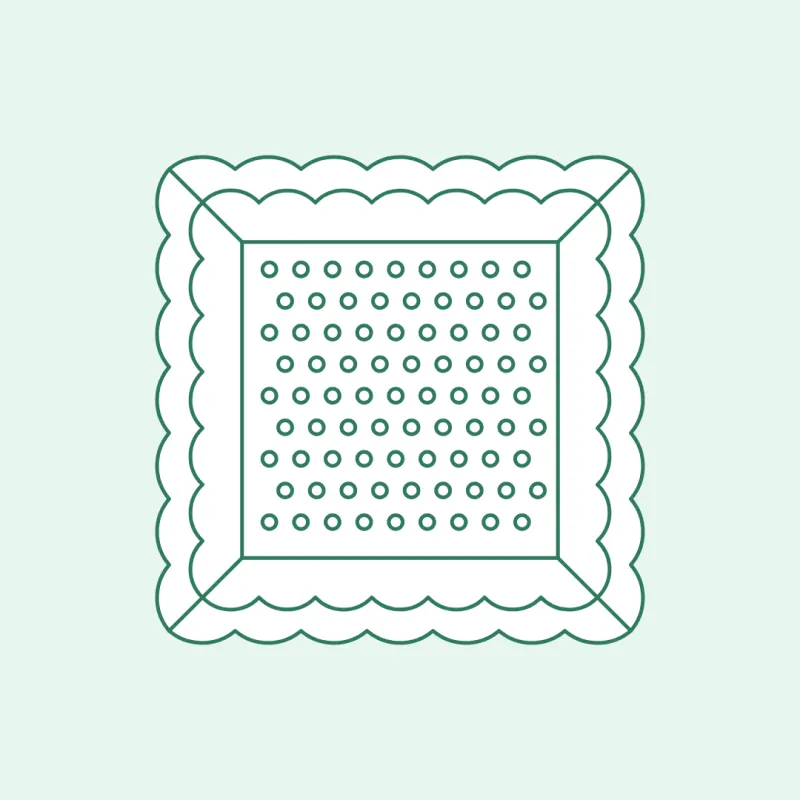
Feather Border Square Shawl
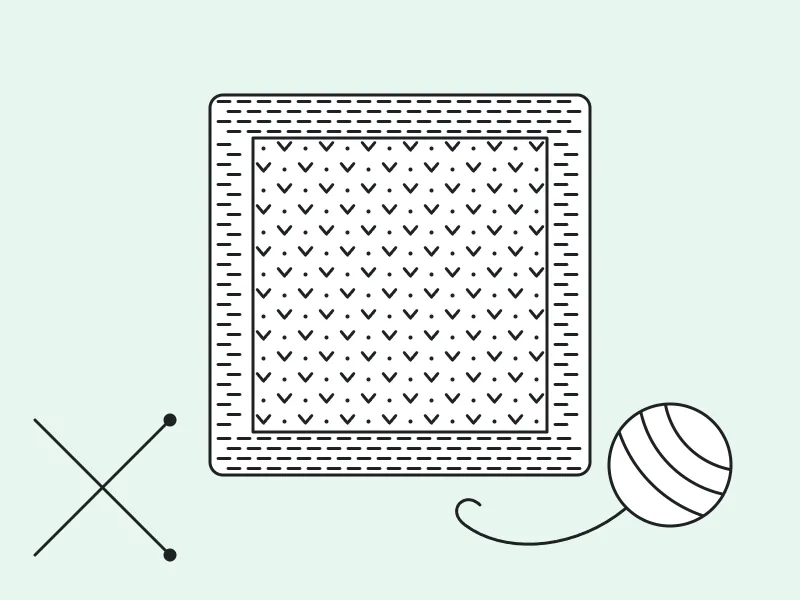
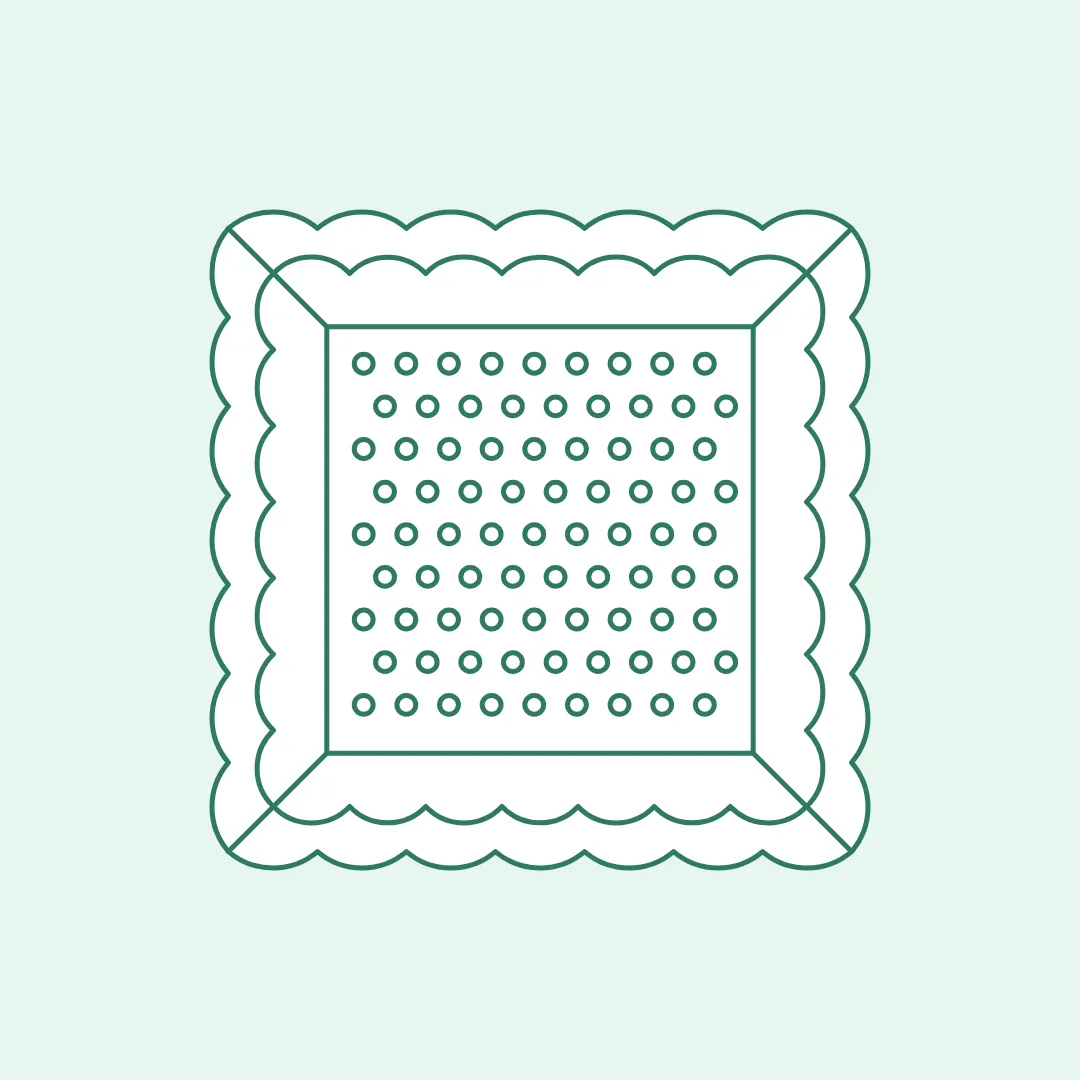
A square shawl with an eyelet centre and a feather border turned at mitred corners. About 36 in (91 cm) square after blocking. Intermediate.
Intermediate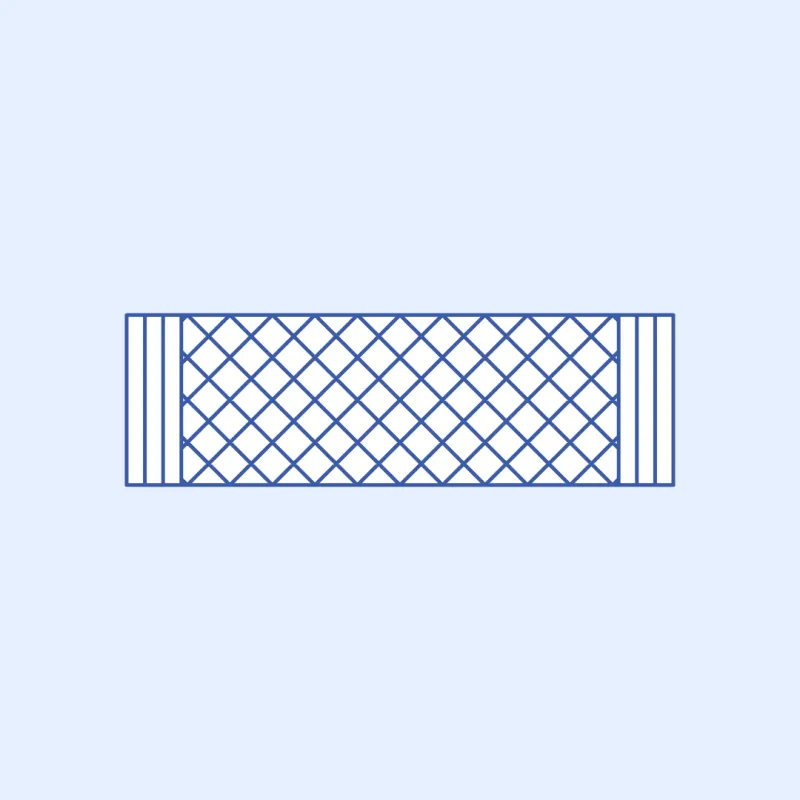
Venetian Lace Wrap
Lace on both sides of the work, framed in garter. About 19 × 65 in (48 × 165 cm) after blocking. Advanced.
Advanced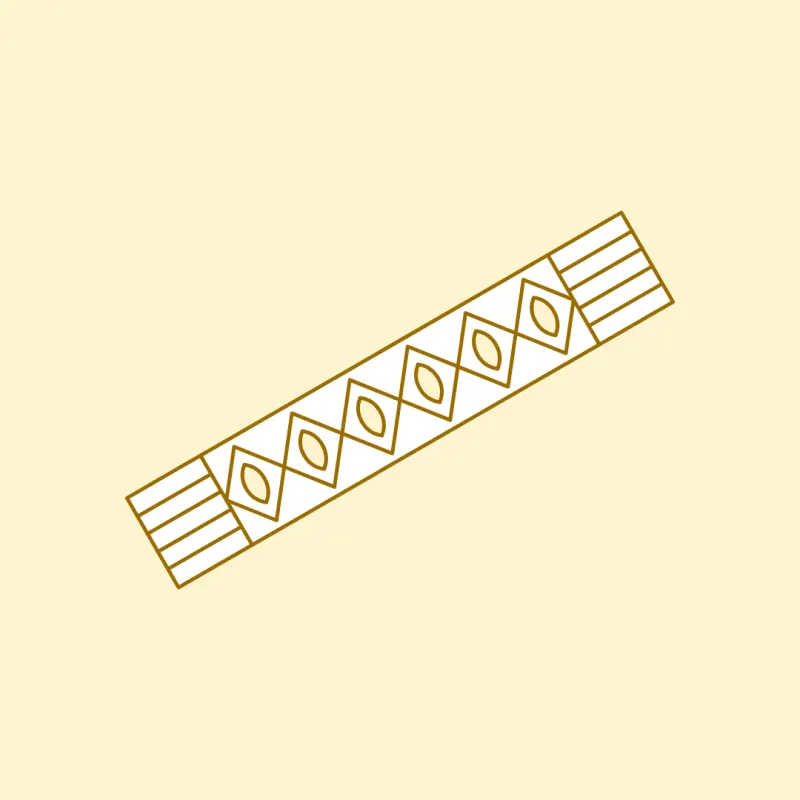
Midnight Lace Scarf
A fine scarf of leaves and diamonds between ribbed lace borders. About 14 × 70 in (35.5 × 178 cm) after blocking. Intermediate.
Intermediate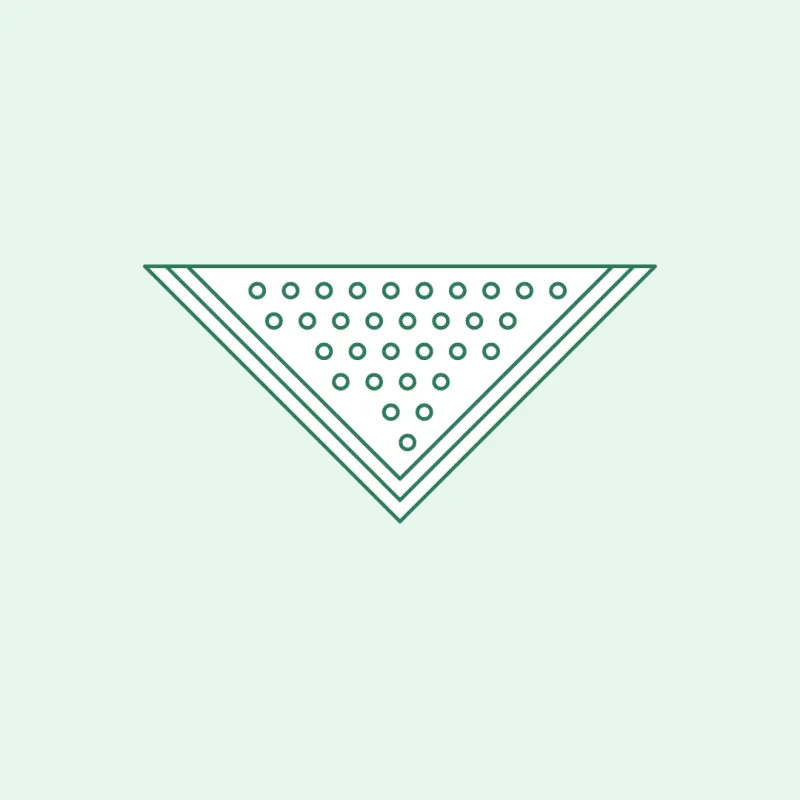
Half-Square Kerchief
A triangle started from a single stitch, with openwork and garter edges. About 25 in (63.5 cm) on the short edges. Easy.
Easy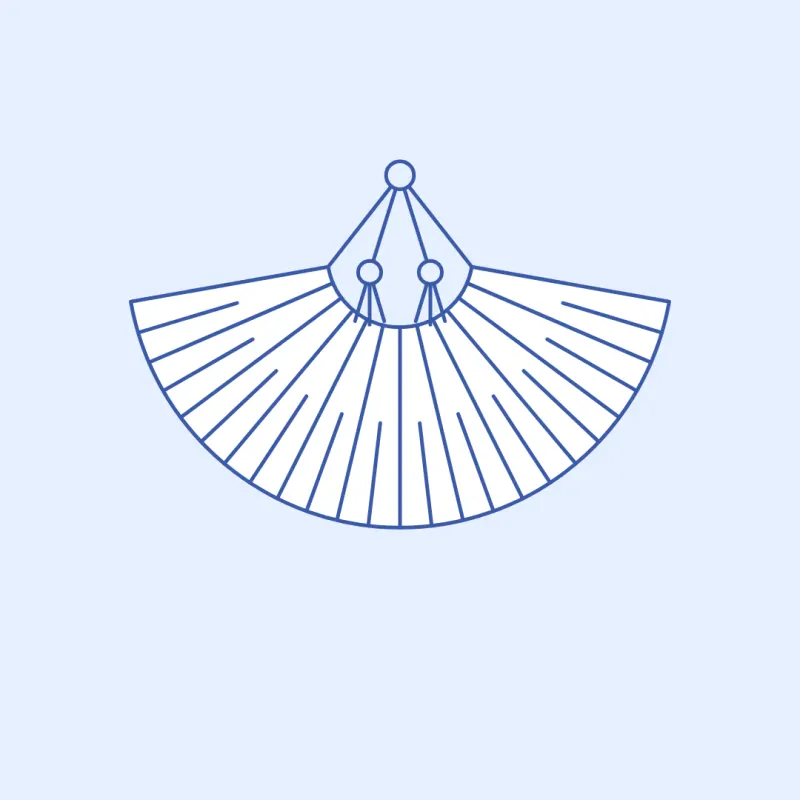
Brioche Shoulder Cape
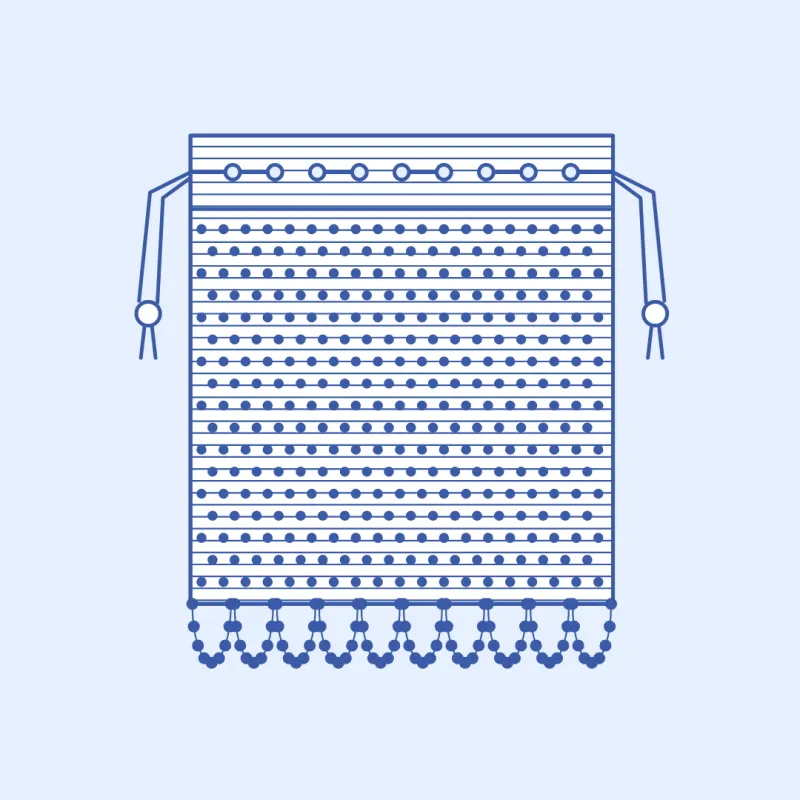
A cape knitted sideways in reversible brioche rib, tied with a twisted cord. About 12 in (30.5 cm) deep. Intermediate.
Intermediate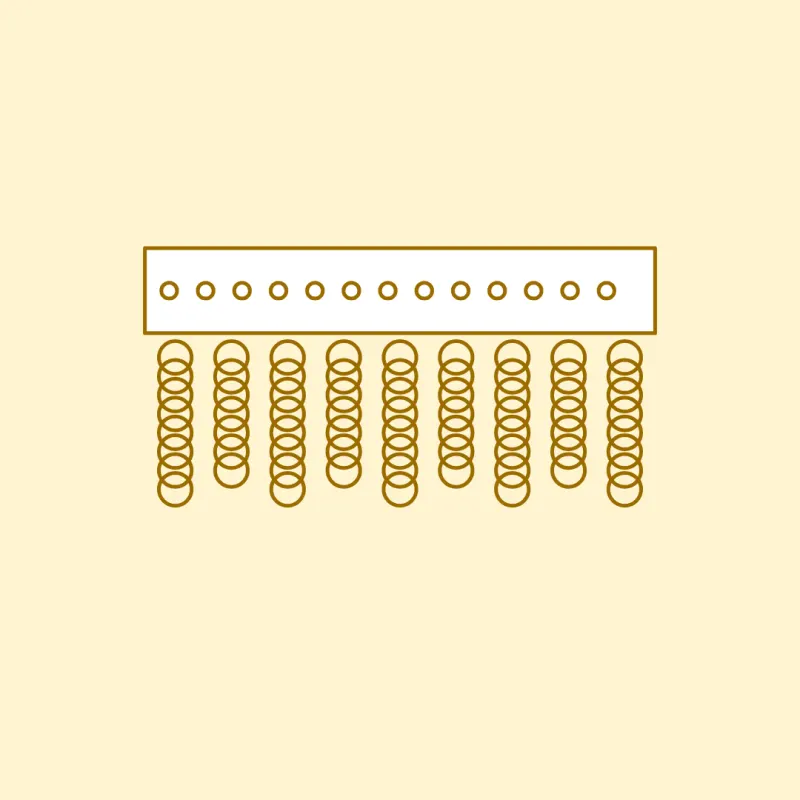
Curled Shawl Fringe
A narrow strip you part-unravel into curled loops, for any piece in this book. Loops hang about 1½ in (4 cm). Easy.
Easy
Open the pattern book in Row & Round
Victorian Shawls & Wraps is a pattern book in the Row & Round app: $4.99, a single purchase that is yours to keep. Other countries see their local price.
A shawl centre that became a wrap
Eléonore Riego de la Branchardière's 1848 Knitting Book gives this lace as the middle of a shawl: 271 stitches wide, knitted 14 patterns long. The same page offers it in cotton as an anti-macassar. We kept the lace and changed the proportions to 95 stitches, four repeats across, and 28 repeats down, which stretches a squarish centre into a wrap of about 19 × 65 in (48 × 165 cm).
The old text opens with "Knit 4 rows plain, and then commence the pattern", so the wrap keeps four garter rows at each end. The book numbers its lace rows 1 to 16; here they run 5 to 20, so the count carries on from the garter. Lace is worked on both faces. Wrong-side rows have their own yarn overs and purl decreases, and the stitch count swings between 95 and 97 on every lace row.
The book also has a misprint. Row 7 loses a closing bracket, and we read it as "make 1, and knit 2 together" twice, the only reading that adds up to a 22-stitch repeat. When sixteen lace rows look alike and half of them are worked from the wrong side, keeping your place in Row & Round earns its keep.
Use fingering-weight (#1) wool or a wool-silk blend, about 900 yd (823 m), on US 6 (4 mm) needles: long straights, or a 24 in (60 cm) circular worked flat. Gauge is 20 stitches and 28 rows to 4 in (10 cm) over the lace after blocking. Pin it out with the long edges dead straight. Advanced.
Mee's scarf, narrowed for lace-weight yarn
Cornelia Mee's Exercises in Knitting (c. 1846) calls this a "Beautiful Pattern for a Scarf" and says that in fine black wool or silk "it has the effect of black lace". Hence the name. Her scarf starts from 130 stitches, 14 border repeats and then 8 centre repeats, in the finest pins of the day.
Ours is narrower. The borders use 78 stitches and the centre 82, four stitches added on Row 11 and taken away again on Row 25, which gives about 14 in (35.5 cm) in lace-weight yarn. Mee's border is "about half-a-yard deep" and her centre runs "from 1½ to 2 yards"; those became 8 border repeats (about 7 in) and 37 centre repeats (about 56 in). Her edge stitches were knitted and purled on alternate rows. Here they are knitted every row, so the long edges lie flat. The border carries a purl-2 rib on both sides rather than one, and her netted silk fringe is left out. The Curled Shawl Fringe can go on the ends instead.
You need lace-weight (#0) wool or wool-silk, about 750 yd (686 m), and US 4 (3.5 mm) needles. Gauge is 24 stitches and 32 rows to 4 in (10 cm) over the centre. Block it hard, because pinning is what opens the borders. Intermediate, and finished at about 14 × 70 in (35.5 × 178 cm).
A six-stitch centre and a border borrowed from another book
Miss Lambert's My Knitting Book (1843) gives the centre of this shawl as nothing but a stitch pattern: "Cast on any number of stitches that may be divided by six." No size, no row count. We chose both, so the centre comes out about 30 in (76 cm) square. Her "pearl knitting" rows became plain purl rows between two garter edge stitches on each side, as her note about "two plain stitches at the beginning and end of each row" asks.
The border is not hers. It is Mee's twelve-stitch feather pattern, one lace row followed by three plain ones, and she gives only those rows. How to pick up stitches round the centre, how to work in rounds and how to turn a corner are ours: a yarn over each side of every corner stitch, on alternate rounds. If a corner puckers, that is the first place to look.
The border adds about 3 in (7.5 cm) per side, so the shawl measures about 36 in (91 cm) square once blocked, each scallop pinned individually. Fingering-weight (#1) wool, about 1,000 yd (914 m). Use a US 6 (4 mm) 32 in (80 cm) circular for the flat centre and a 60 in (150 cm) one for the border. Gauge is 20 stitches and 28 rows to 4 in (10 cm), and it sets the final size, so swatch and block first. Intermediate.
A kerchief that starts with one stitch
Lambert's "warm Half-square Shawl" begins "Cast on one stitch", worked in rose and white wool with a plain border in one colour and the lace in the other. We use a single yarn. If you want the contrast, a separate ball for the 7-stitch garter border does the job.
Two things differ from the 1843 text. Lambert increases only at the end of wrong-side rows. We add an increase at the start of every other right-side row as well, three stitches every four rows, so the corner comes out square in DK yarn. And her lace rows are counted again from the edge each time, so the little yarn-over groups do not line up from row to row. That looks like a slip but is how the original is worked, and the chart shows only the point and the first repeat for that reason.
A garter border runs down one short edge and a 12-row garter band finishes the other, so the two edges that hang down are bordered and the long edge sits at your neck. It measures about 25 in (63.5 cm) on each short edge and 35 in (89 cm) along the long one. DK-weight (#3) wool, about 300 yd (274 m), a US 7 (4.5 mm) 24 in (60 cm) circular worked flat, gauge 22 stitches and 30 rows to 4 in (10 cm). Easy.
A tippet that never said how to tie it
Miss Watts's second series (second edition, 1840) calls this a "Warm Tippet". Cast on 60 stitches, "slip a stitch and knit 2 taken together", and the rib that results is brioche. The shaping comes from short-row wedges: knit "backwards and forwards in this manner advancing 6 stitches farther each time", then recede by the same steps.
Ours casts on 48 stitches in worsted wool. Each of the 12 wedges runs from 6 stitches out to 42 and back again, 26 short rows, with 18 full rows between wedges. Watts also adds and removes whole ribs to widen the back; we leave those out and let the wedges alone do the work, so the hem ends up about 2⅓ times the neck edge. The turns are worked without wraps, as the original mentions none. Watts does not say how the tippet fastens, so we add a twisted cord to tie it.
Worsted-weight (#4) wool, about 450 yd (411 m), and a US 9 (5.5 mm) circular needle. The cape is about 12 in (30.5 cm) deep, 23 in (58.5 cm) along the neck edge before gathering and 54 in (137 cm) around the hem. Brioche rib looks the same on both sides, so either face can go outward. Intermediate.
A fringe that curled because it was dried by the fire
Lambert's 1847 second series has a fringe made from a narrow strip of the same two-stitch lace on every row. Cast on twelve, bind off half and "unravel the remainder for the fringe". Her curling trick: "the knitting should be thoroughly damped, and afterwards dried before a fire. This will cause the wool to curl." We let it dry flat instead, which gives looser loops. She also asks for each loop to be knotted "close to the knitting", and for the strip to be knitted in one length and eased a little where it rounds a point.
Use DK-weight (#3) wool held double, about 100 yd (91 m) per yard (91 cm) of fringe, with US 8 (5 mm) needles. The heading is about 1½ in (4 cm) deep and the loops hang about the same. Gauge does not matter here. Knit the strip to the length of the edge, then sew it on to the wrap or the scarf. Easy.
Questions
- Which of the six should I knit first?
- The Half-Square Kerchief. It starts from one stitch, grows by regular increases and uses a single lace stitch. The Curled Shawl Fringe is the other Easy pattern, though you will want a shawl, wrap or scarf to sew it onto.
- Why does the Venetian Lace Wrap change stitch count on every row?
- Both faces carry lace. Each right-side row adds two stitches with yarn overs, taking you from 95 to 97, and each wrong-side row returns you to 95 with purl decreases. The garter edges stay put throughout.
- Can I knit the Midnight Lace Scarf in something heavier than lace weight?
- You can, but the numbers change. The scarf is sized for 24 stitches and 32 rows to 4 in (10 cm). A heavier yarn on the same stitches gives a different width and length, and the 750 yd (686 m) estimate no longer applies. Swatch and block first.
- Is the Brioche Shoulder Cape reversible?
- Yes. Brioche rib looks the same on both sides, so either face can sit outward. The twisted cord that ties it is added at the end.
- How firmly should I block the lace?
- Quite firmly. Soak, roll in a towel and pin out to the finished measurements. The scarf takes the hardest pinning, since that is what opens its borders. The square shawl needs every border scallop pinned individually.
Open the pattern book in Row & Round
Victorian Shawls & Wraps is a pattern book in the Row & Round app: $4.99, a single purchase that is yours to keep. Other countries see their local price.